



At Brist, It's All in the Family
In the last of our four-part video series on Istrian producers, Brist is a family business where every member has a role.
 Silvano Puhar (Photos by Pablo Esparza for Olive Oil Times)
Paul O’Grady, an Irishman who married into an olive-growing family in Croatia, now plays a key role in the family business. The family’s farm, Brist, focuses on producing high-quality olive oil using native cultivars in a region with a long tradition of olive growing.
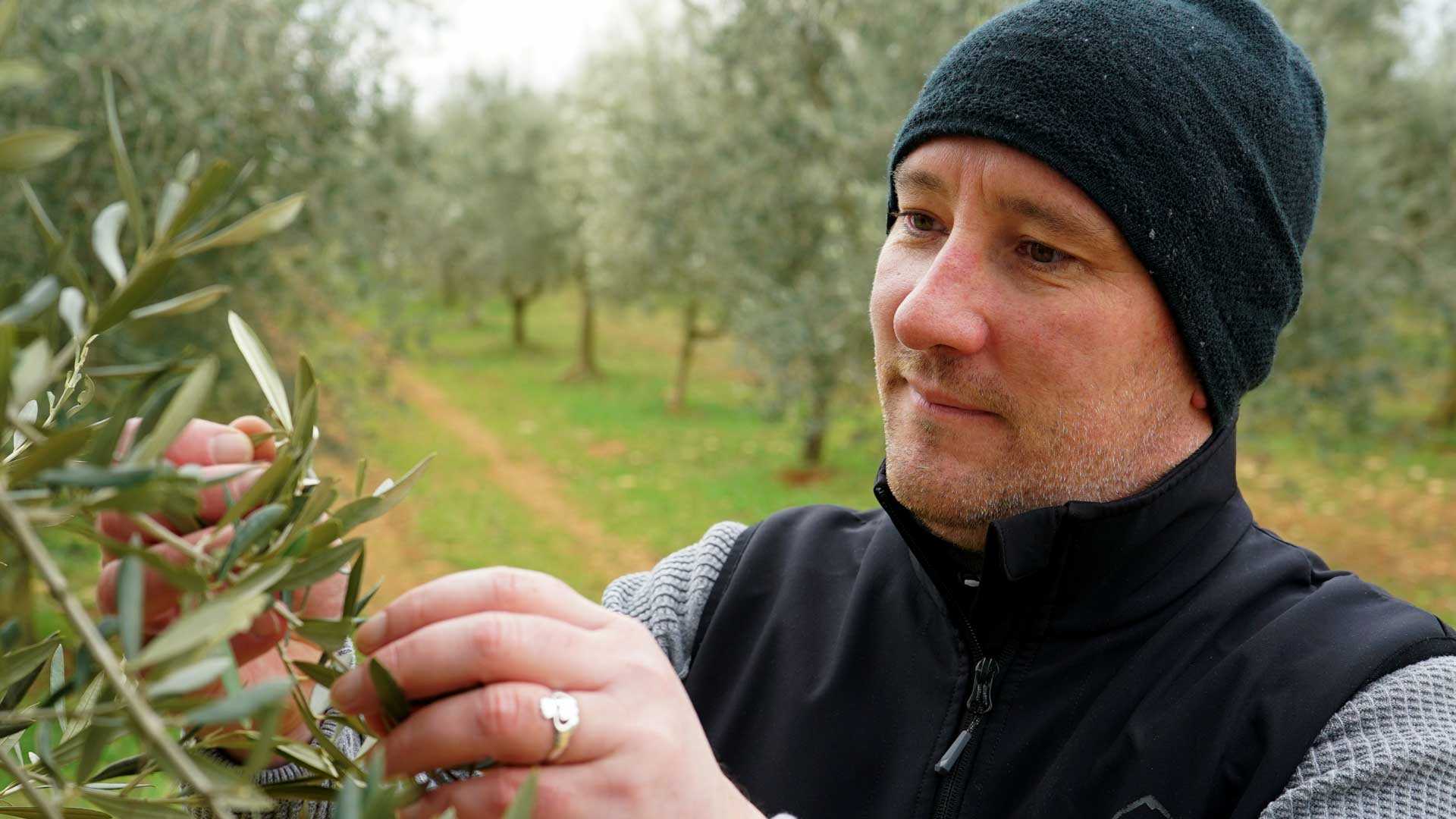
“It is a little bit unusual that one finds an Irishman in the middle of an olive grove. It was very far from olives where I was born. Probably closer to potatoes I think,” Paul O’Grady says as he walks among olive trees at Brist’s farm in Vodnjan, on the Croatian side of the Istrian peninsula.
Before becoming “the Irish member of this olive growing family,” O’Grady, an architect, had many jobs, from business coach to teaching English and Irish dancing.
“When I married into this family and moved to this part of the world, I was fascinated by everything, about the farm, about how it’s done. And I got involved,” he says.
“I had to learn everything from zero and that’s one of the really enjoyable things for me.”
Silvano Puhar, his wife’s father, agrees. Brist is a family business where every member has a role.
Silvano takes care of the land, while his daughter Lena is in charge of tasting and blending the oil.
“No wonder why they chose the Irish one to be the storyteller of the family,” Paul jokes.
The terrain in this part of Istria is quite different from the North of the peninsula.
As one heads Southbound and enters Croatia, the rugged lands of the Slovenian coast slowly give way to a milder landscape.
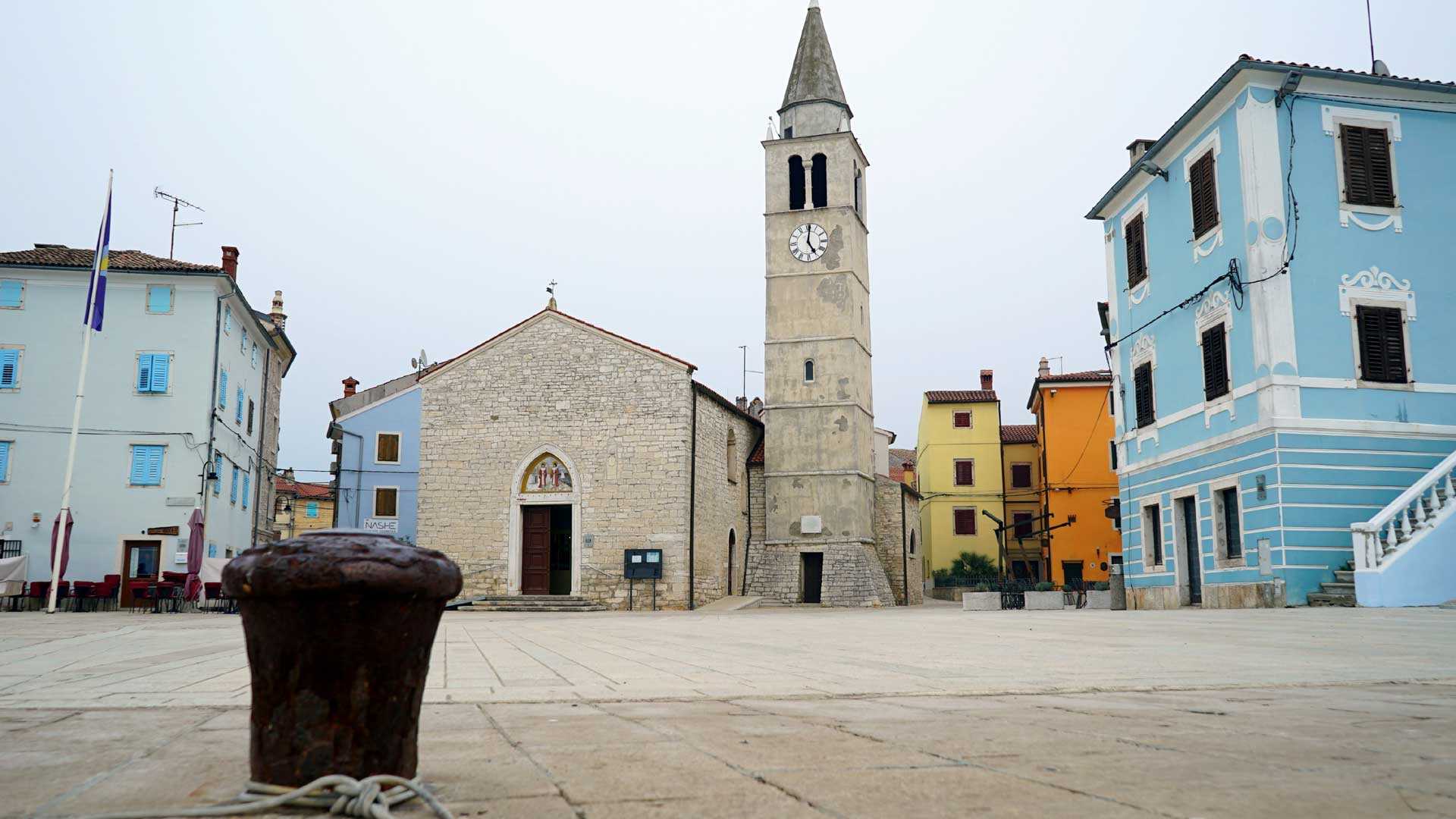
Large oak trees, forests (this is a rich truffle territory), and gentle hills meet the sea. Picturesque Venetian-styled villages remind one that borders have been redrawn many times in this region.
Vodnjan lies some six kilometers inland. With a population of around 6,000, this town used to be an important trade center in the times of the Republic of Venice which lasted until the end of the XVIII century. Its location at 135 meters above sea level –- far enough from the humidity of the coast — made it a healthy place to settle.
“Olive growing in this region of Istria has a very long tradition dating back to Roman times. Its high point was during the time of the Venetian Republic when there was the greatest amount of trees, which was followed by a period of continual decline. After the Second World War there was a sudden drop,” Silvano explains.
Born in Pula, the largest town in the area, just 10 kilometers away, Silvano, a now-retired electrical engineer, describes himself as a “child who grew up surrounded by asphalt.”

“My parents and my wife’s parents, they all left the land and resettled in the bigger towns to work in the factories. Olive growing effectively died, which meant that for those of us who have this tradition there was a break of 50 years“, he says in a mix of English and Croatian which I’m able to understand thanks to Paul’s simultaneous translation.
“The whole of my life, my mother, who passed away last year in her 98th year, always spoke to me about the importance of the land, which, while I was young, was quite a virtual concept“, he adds.
Eighteen years ago, Silvano bought a plot of approximately 10 hectares and decided to “reconnect with the land” and started producing olive oil again. That’s how Brist –- which literally means “elm tree” — began, he recalls.
Now, they have around 2,000 olive trees and also buy olives from other nearby farms.
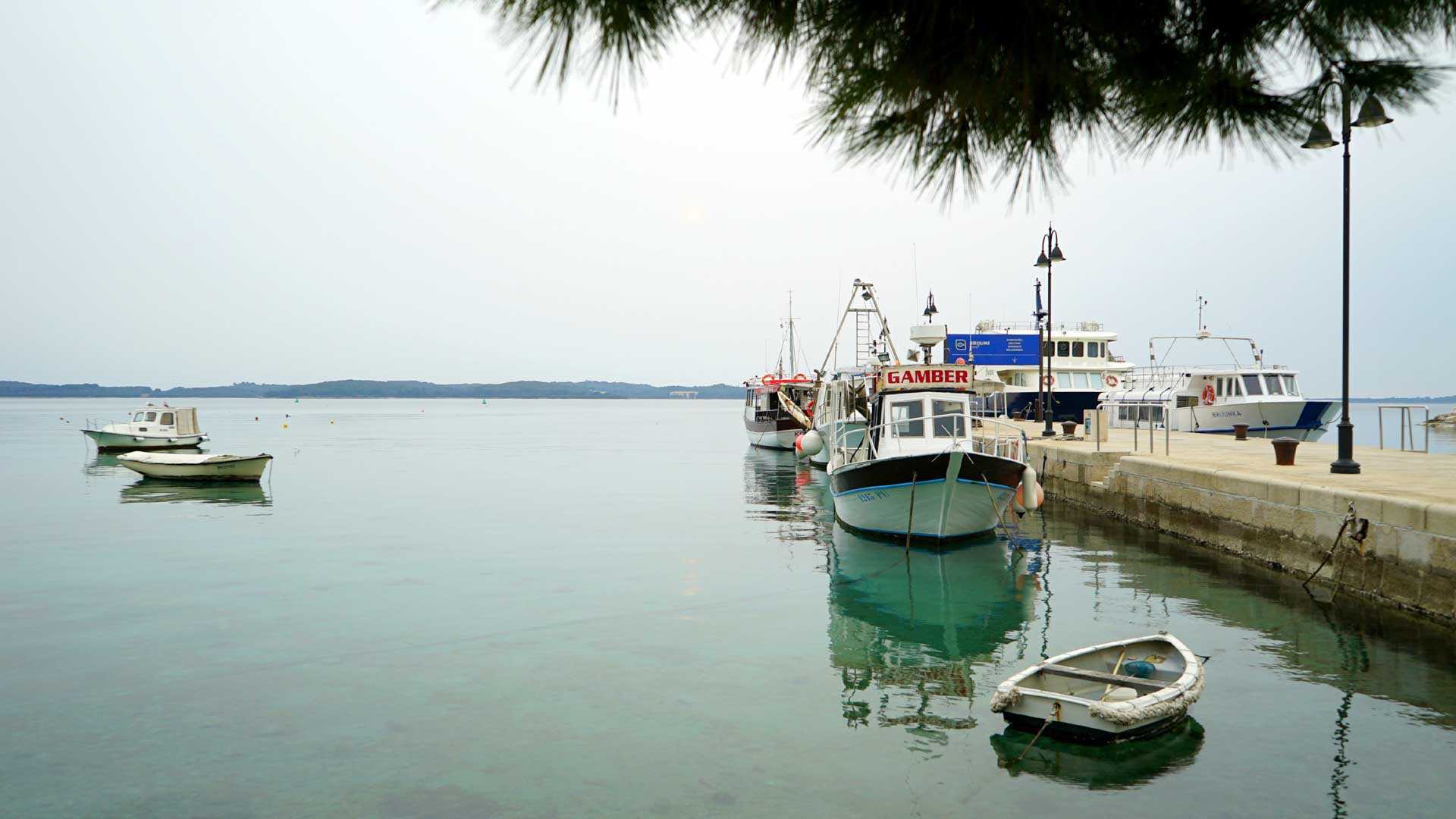
Brist’s farm is not far from the village of Vodnjan. From the olive grove one can spot the sea some kilometers away and the dark silhouettes of the Brijuni Islands.
Now a national park, back in the days of Yugoslavia, the small archipelago used to be a holiday playground for Marshall Tito, the president of the socialist country, and his guests.
Recently planted trees mix with century-old ones at the Brist’s estate. Most of them are Buza, a local cultivar which may slightly vary from village to village across the region and which is known as Buga in Slovenia.
“It is evident from the past that native varieties have an advantage over introduced varieties, like those from Italy for example, as they have adapted to this specific microclimate over the last two thousand years,“ Silvano says.
“In world markets, which are saturated with oils from big producing countries such as Spain, Italy, Greece and others, Turkey, Tunisia, we cannot compete in quantity. We can, however, compete with the authenticity of our varieties,” he suggests.
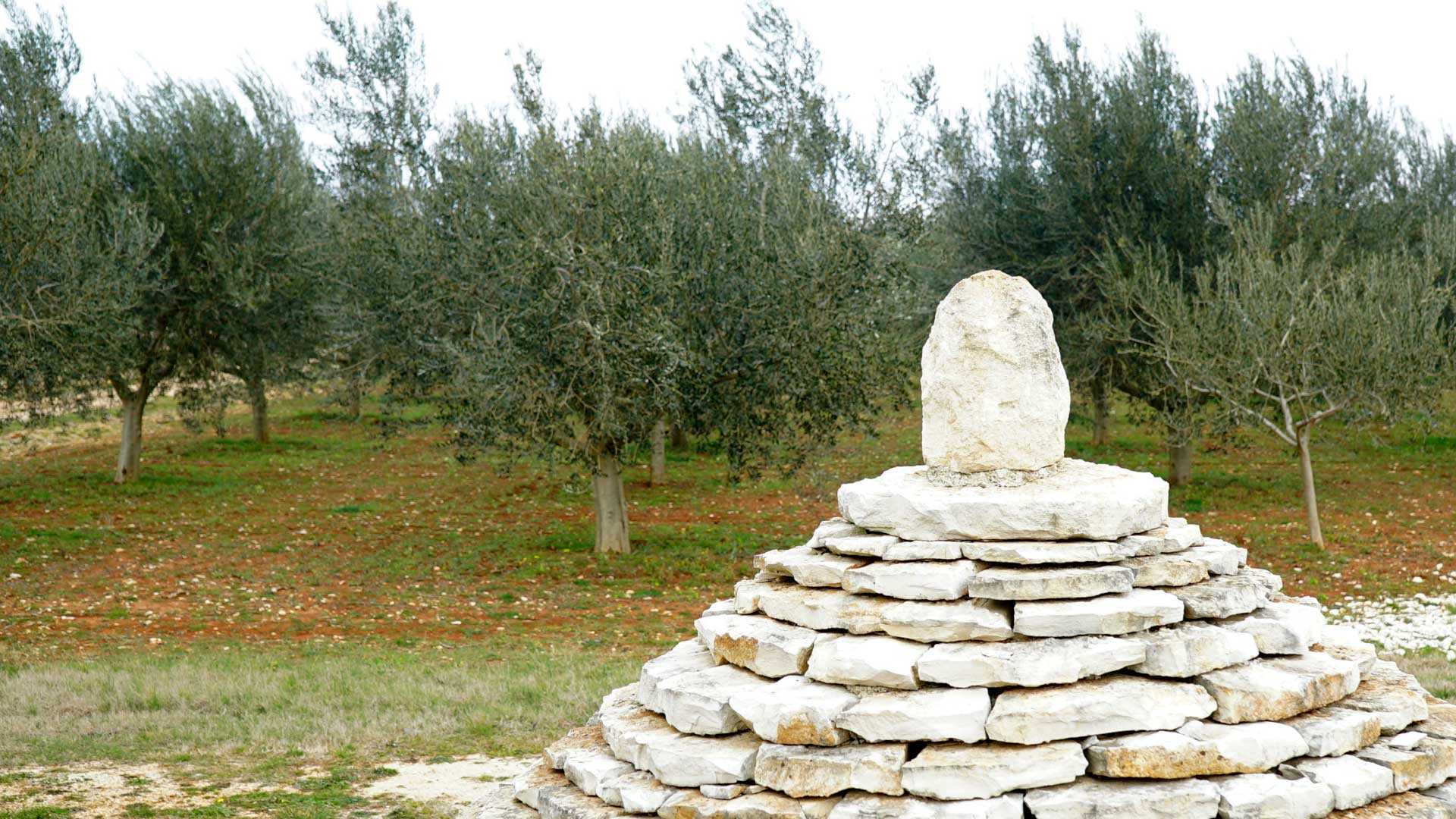
Dry stone walls and a few small stone shepherd shelters, known as kazuni in Croatian, surround the olive grove and give Brist’s farm an almost secluded atmosphere.
This ancient technique of construction by stacking stones upon each other, without using any other materials except sometimes dry soil, is spread throughout the Mediterranean region from Cyprus to Spain and was inscribed in 2018 in the list of Intangible Cultural Heritage of Humanity by Unesco.
Croatia has an annual olive oil production of around 4,000 tons, far from other Mediterranean countries such as Italy, Spain or Greece in terms of quantity.
However, the quality of Croatian olive oil is increasingly appreciated, taking home 40 prizes from the 2018 NYIOOC World Olive Oil Competition, only behind Italy, Spain, the United States and Greece. In that edition of the contest, Brist won a Gold Award.
“This microclimate is exceptionally well suited to grow olives. Istria is a small region and it’s very close to the sea so we get these nice sea breezes. We also have the bura wind, which is the north wind and comes across. Those two winds are very good,” Paul mentions as one of the factors that make this region special for olive oil production.
“We produce a very limited quantity but of maximum quality. The reason for this is that during the period of socialism here this land was abandoned and now we have reactivated it. This means that this land is clean, virgin and has not been affected with mineral fertilizers“, Silvano adds.
Share this article
Related Articles
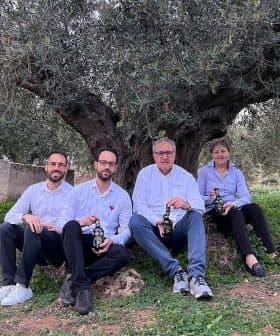
Dec. 15, 2025
Young Sicilian Producer Revitalizes Ancient Groves with Innovation
A third-generation producer in western Sicily is combining family tradition, scientific training and innovative farming practices to produce award-winning olive oil while adapting to climate change.
Jun. 19, 2025
Adriatic Olive Oil Excellence Takes Center Stage at High-Profile Postira Symposium
A landmark symposium in Postira this September will spotlight the region's dedication to olive oil quality, innovation, and cultural heritage through a program of tastings, workshops, and expert-led discussions.
Oct. 29, 2025
Monte Rosso: A Family Dream Reborn on Istria’s Red Hill
On Istria’s Red Hill, Davor Duboković and his partners turned abandoned land into one of Croatia’s most advanced olive estates.

Dec. 5, 2025
Tuscia Producer Builds a Legacy of Award-Winning Organic Oils
On the hills above Lake Bolsena, Alessandra Nicolai has transformed her family’s land into a model of organic farming, producing the award-winning A1980 extra virgin olive oil and expanding into natural wines.

Feb. 23, 2026
Orthodox Monastery Earns Three Gold Awards at NYIOOC for Bosnia and Herzegovina
A Serbian Orthodox monastery in southern Herzegovina won three Gold Awards at the NYIOOC, adding to Bosnia and Herzegovina’s growing list of recognitions at the world’s largest olive oil quality contest.
Jul. 1, 2025
Torres Family Expands Legacy With Award-Winning Results
Since the fifth-generation winemakers began crafting extra virgin olive oil from centuries-old trees, their commitment to quality has been consistently recognized with numerous awards.
Mar. 30, 2026
On Menorca, an Olive Oil Identity Shaped by Soil, Sea and Wind
The producer Son Felip is drawing attention to a distinctive Menorcan olive oil profile shaped by regenerative farming, island conditions and a long-term commitment to biodiversity.
Sep. 26, 2025
Crafting Award-Winning Olive Oil in the Shadow of Mount Fuji
Hundreds of kilometers away from Japan’s central olive-growing hub, one producer has braved the elements to produce unique extra virgin olive oil.