Award-Winning Greek Producer Nurtures Soil Health and Patrini Olives
Spiridon Anangnostopoulos of Ranis has used his expertise to create the ideal soil substrate for his olive trees, bringing a local olive variety out of obscurity.
Agronomist Spiridon Anagnostopoulos, an expert in olive tree cultivation and the owner of Ranis from northwestern Peloponnese, knows that the key to strong, productive olive trees is to take good care of the soil in which they grow.
“A healthy soil means that our olive trees can absorb the nutrients they need to grow properly throughout their whole biological cycle and phenolic-creating stages,” Anagnostopoulos told Olive Oil Times.
We grow a unique olive variety using modern scientific cultivation methods that, at the same time, protect the environment and promote the sustainability of our product.
After venturing into the retail sale of agricultural supplies by opening physical stores and an online store in the 2000s, Anagnostopoulos decided to enter the world of olive oil production by investing in the local Patrini variety.
“We spotted a gap in the market since Patrini was largely unexploited,” he said.
See Also: Producer ProfilesThe crew was ready from the outset: Anagnostopoulos teamed up with his wife, a chemist, and his colleagues from his retail business, agronomists and marketing experts, to form the team behind Ranis.
Founded in 2017, the company owns 1,500 olive trees of Patrini (also known as Koutsourelia), a cultivar that gives small, conical-cylindrical drupes usually harvested from November to December.
In Chalandritsa, a semi-mountainous area south of Patras in the Peloponnese, the olive trees of Ranis grow in their natural habitat.
“Chalandritsa is considered the home of Patrini,” Anagnostopoulos said. “The combination of the area’s terroir, altitude and microclimate is ideal for the demanding but promising Patrini trees to thrive.”
Anagnostopoulos added that most problems arising in cultivating the company’s olive trees are related to abiotic factors.
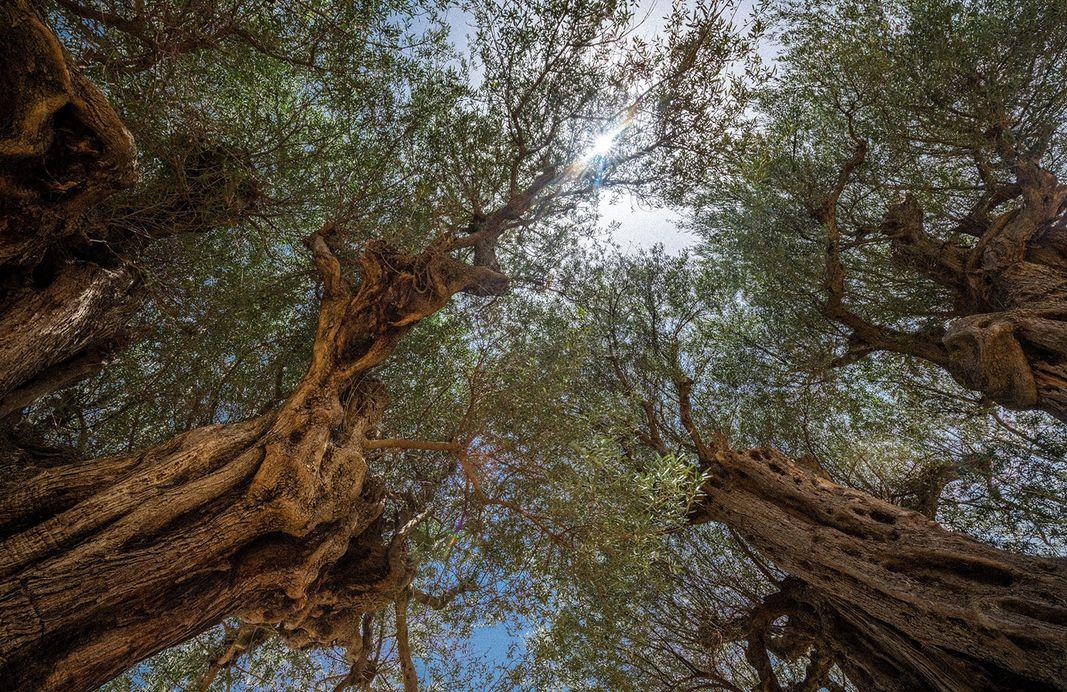
Ranis focuses its olive farming and oil production on the local Patrini olive variety.
“Along the Mediterranean, extreme weather conditions such as thermal stress, drought and flooding, can affect yields by negatively impacting the quantity and quality of the olive oil and the olive cultivation in general,” he said.
“Based on our know-how and cumulative experience, maintaining a healthy soil is our top priority for our trees to develop properly,” Anagnostopoulos added. “So, we increase the soil’s potential for the trees to absorb more nutritious ingredients, consequently increasing their tolerance against the unforgiving abiotic factors.”
According to a specific cultivation protocol Ranis has developed over the years, Anagnostopoulos said microorganisms and probiotics enrich the soil in the company’s olive groves to create the ideal tree substrate.
“Our medium-intensity, fruity olive oil already boasts a unique organoleptic profile,” he said. “Combined with soil-based probiotics such as bacteria, microorganisms further enhance the organoleptic characteristics and quality of our oil, including the color, fragrance and flavor.”
He also noted that the soil supplements used by Ranis come from Spain and the United States, two countries that pioneer scientific research in environmentally friendly soil improvement methods.
See Also: How Intensive Agriculture and Olive Cultivation Impact Soil Health“We grow a unique olive variety using modern scientific cultivation methods that, at the same time, protect the environment and promote the sustainability of our product,” Anagnostopoulos said.
Packaged in a distinctive crimson bottle, Castello del Barone Collector’s Edition is the masterpiece in the Ranis’ lineup of olive oils.
Characterized by the company as “an aristocratic extra virgin from the Venetian era,” Castello del Barone is a monovarietal, high-phenolic organic olive oil from early harvested Patrini olives.
“The records show that the Patrini variety has been cultivated in Chalandritsa since the 13th century when the Venetians ruled the area,” Anagnostopoulos said.
“We harvest early, from mid-September to late October,” he added. “Barone is a unique extra virgin olive oil boasting a vivid green color, a fruity aroma and a balanced taste of bitter and pungent.”
Barone and Ranis, another extra virgin from Patrini olives produced by the company, are also high in polyphenols, bearing a health claim that meets the E.U. regulation 432/2012 requirements.
“Analysis by the University of Athens has shown that the levels of phenolic compounds in our olive oils, such as oleocanthal and oleacein, are above average,” Anagnostopoulos said.

Castello del Barone earned a Gold Award at its debut entry to the NYIOOC World Olive Oil Competition.
The perseverance and efforts of Anagnostopoulos and the entire Ranis team to perfect their olive oil have paved the way for the industry’s most coveted quality awards; Castello del Barone won a Gold Award at the 2023 NYIOOC World Olive Oil Competition last April, in its first appearance in the competition.
“Winning in such a prestigious competition is the highest reward for all our hard work,” Anagnostopoulos said. “One of our goals when founding Ranis was to participate in the NYIOOC.”
Anagnostopoulos added that the NYIOOC awards are also the key to new markets for olive oil producers looking to expand their business.
“There would be no other way for our variety and region to enter the olive oil world map if it weren’t for the NYIOOC,” he said. “After winning, our orders in the partner markets of the United Arab Emirates doubled, and our Barone brand also caught the attention of new markets such as the United States and Canada.”
Regardless of Ranis’ achievements, Anagnostopoulos recognizes that success comes with responsibility as he expresses his determination for continuous progress.
“We have already raised the bar, and we will continue to strive to improve further,“ he said. “Our high-phenolic, organic extra virgin olive oil from Patini olives is a unique product characteristic of our region that we ought to protect and nurture.”