From Champagne to Extra Virgin Olive Oil: An Award-Winning Italian Producer Embraces His French Heritage
Vazart & Sons combine scale with technology and tradition to continue their generations-long pursuit of excellence in agricultural production.
Tucked into the fertile Tuscan hills dotted by olive and cypress trees are the evocative remains of unforgotten history, which greet the visitor who wanders into the domain of this Italian producer with a French heart.
Winner of a Gold Award for the second consecutive year at the 2021 NYIOOC World Olive Oil Competition, Vazart & Sons olive farm is located between the historic city of Florence and the town of Vinci.
The best results come from adding modern technology to traditional means, such as the hand harvest and the careful pruning of the olive trees.
The family’s land stretches from Leonardo’s hometown to the Chianti region, an area renowned for the beauty of its hills and the unique flavors of its wines and olive oils.
Alexandre Vazart and his family greet visitors in his large country house surrounded by thousands of olive trees and ancient dry-stone walls carving up the hilly and uneven terrain.
See Also: Producer Profiles“We came here just a few years ago,” Vazart told Olive Oil Times. “We were captured by this enchanting place and the desire to care for an olive grove that had been neglected for so many years.
Vazart and his family were not new to farming. His father and grandfather produced Champagne, following a tradition that started at the beginning of the 19th century. Their descendants, though, had different goals.
“My wife and I wanted to work with olives and finally found this location where we could apply a completely organic approach to olive growing,” Vazart said. “Fava beans are used as fertilizers, and gentle soil tillage is designed to make the land breathe. We also breed bees, one more reason to have a completely organic orchard.”
Walking around the orchard, perfectly pruned Frantoio and Moraiolo olive trees quietly climb up the hill. Most of them are relatively young trees whose history spans only a few decades.
“I am not one of those who are obsessed with old trees, even if they are beautiful,” Vazart said. “You do not need an ancient tree to obtain a high-end olive oil. I truly like the idea of planting new olive trees and expanding our farming ideas to more olive orchards.”
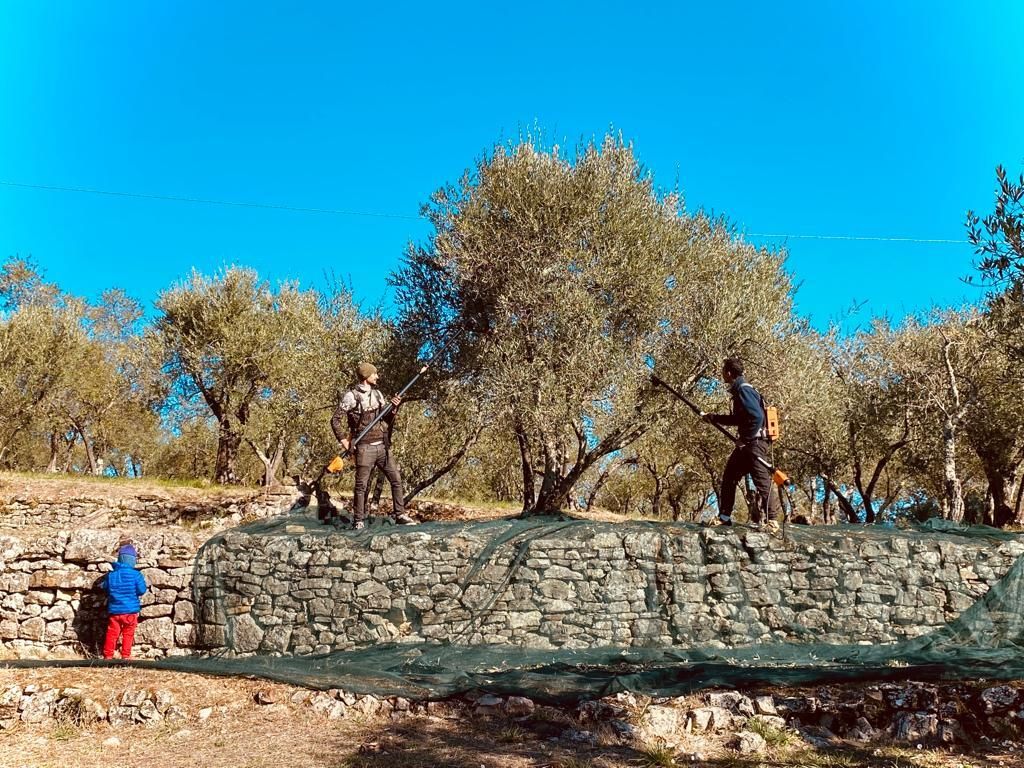
Photo: Vazart & Sons
“Those are our cultivars,” he added. “Mostly Frantoio and Moraiolo, and just some Leccino.”
Vazart hints at the relevance of olive varieties, which represent the ancient tradition of Tuscan extra virgin olive oil.
Frantoio trees usually have a large crown and are medium-sized vigorous trees known for the relatively high yields and the vivid artichoke and grass flavors of their olive oil.
Meanwhile, Moraiolo is a highly adaptable variety, resilient to cold and drought, whose consistent yields tend to minimize the effects of the alternate bearing seasons typical of most olive varieties.
The Vazart family began growing olives in the area in 2017. The family’s success has come from mixing the olive oil to create a high-quality Tuscan blend, whose tasting sensations include artichoke, arugula and olive leaf.
Almost all Vazart & Sons extra virgin olive oil is sold internationally.
“We started with our friends asking for our oils from European countries, Canada and more,” Vazart said. “But since the brand has done so well on the international stage, we are receiving orders from more countries. One of the largest was recently placed by a Saudi Arabian firm.”
Vazart is also exploring the opportunity to expand his operation by planting a new grove on the family land in Strada del Chianti, located in the Chianti Classico PDO area. The region boasts an oil-producing tradition dating back to 1200.
The European Union-certified Protected Designation of Origin is only for local olive farmers who grow Frantoio, Moraiolo, Leccino and Correggiolo olives.
According to Vazart, being a small producer represents an advantage when the goal is high-quality production.
“Thanks to our small dimensions – we have only 2,000 trees – we can take care of each one of them,” Vazart said. “We can prune them without devoting just a few minutes to them, as one can see elsewhere.”
However, the current harvest season has come with plenty of challenges. Bad weather has affected many Tuscan olive farmers.
“This year, we managed to produce only 1,500 liters. Let us hope the weather will be more kind in the future,” Vazart said.
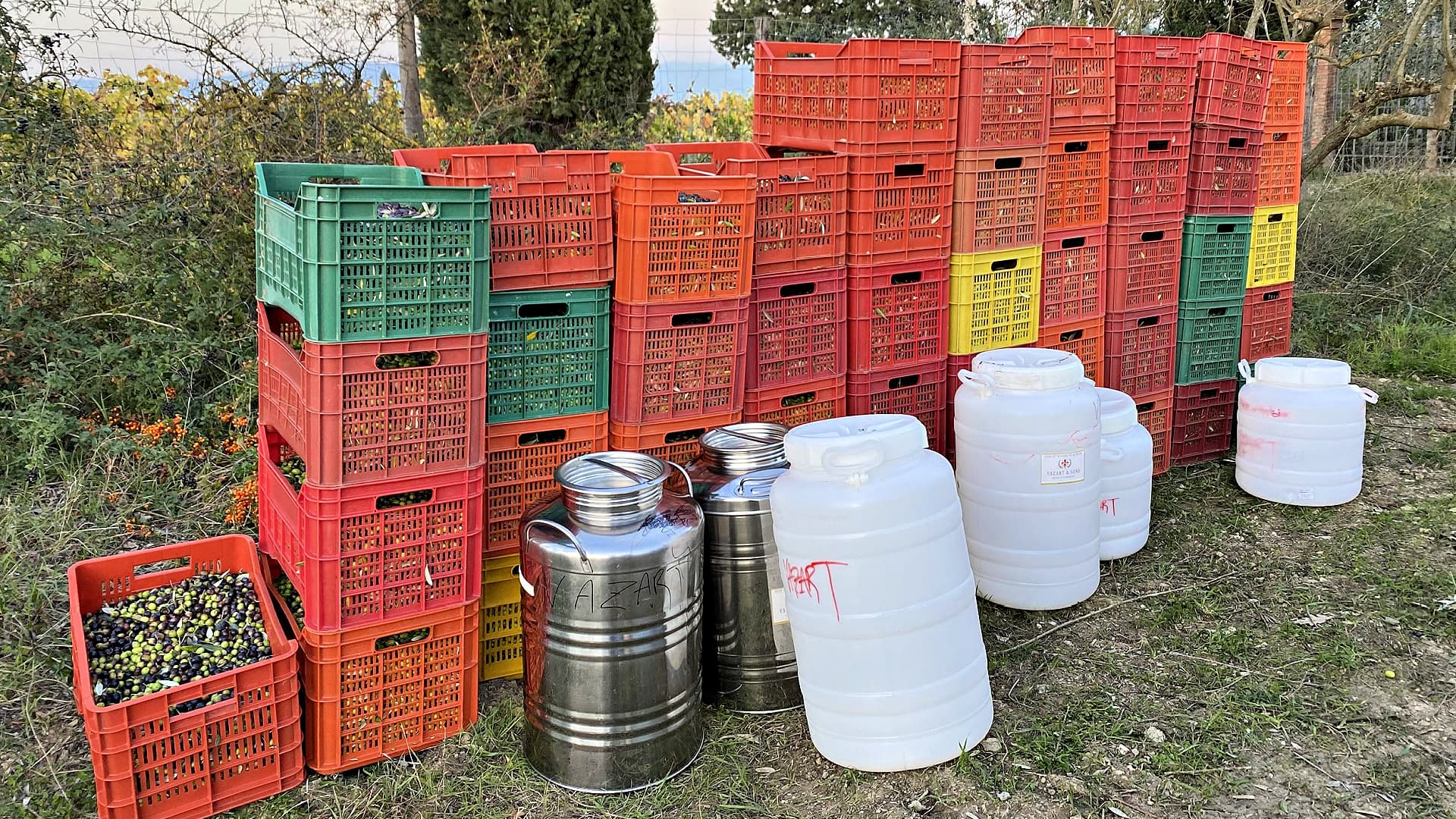
Photo: Vazart & Sons
The Chianti expansion of the farm aims to have groves that are in a slightly more elevated area.
“The new groves will be in areas which are both a little cooler and not exposed to the south, which also means avoiding the warmest sunshine hours in the summertime,” Vazart said in reference to the heatwaves that are becoming increasingly frequent across the Mediterranean basin.
Vazart also attributed his success producing award-winning extra virgin olive oils to his groves’ proximity to a highly technological mill, which begins processing the family’s olives just a few hours after they are harvested.
“That limits their exposure to olive oils’ enemies – light and heat,” he said. “The mill then stores the extra virgin olive oil in steel containers sealed under a nitrogen atmosphere.”
“The best results come from adding modern technology to traditional means, such as the hand harvest and the careful pruning of the olive trees,” Vazart added.
These steel containers usually store the newly-processed extra virgin olive oils for the first two months.
“After that, we proceed to a thorough and gentle filtering operation which brings our extra virgin olive oil to its final destination containers,” Vazart said. “There it stays, in optimal storage conditions, with bottles and other containers filled only when our customers place an order.”
The French-Tuscan olive farmer believes filtering new olive oil is essential to give his extra virgin olive oil the ability to withstand time since that operation removes all the remaining particles and water from the fresh oil. If left unfiltered, the water can accelerate the oxidation.
“Filtering is crucial. I have samples from all the harvests we have made in these years, and I can tell that I have 2017 olive oil samples that are still high-quality extra virgin olive oils,” Vazart concluded.