Extra Virgin Olive Oils Will Be Sent to Space in 2022
Italian astronaut Samantha Cristoforetti will bring seven extra virgin olive oils for her crew to enjoy with their meals and to see how the oils hold up in space.
Next spring, a selection of Italian extra virgin olive oils will be sent to the International Space Station (ISS).
The oils will be brought to the ISS, located about 400 kilometers above Earth’s surface, by Italian astronaut Samantha Cristoforetti, the commander of the mission.
I would not forget to bring olive oil with me, which also gives flavor to anything, even to the rehydrated salads that we eat up here.
Supporters of the initiative hope to study how the product holds up in space and promote olive oil culture.
See Also: Research NewsThe Italian Space Agency confirmed that the astronauts would consume the extra virgin olive oils with their meals. One of the oils will be used to study the impact of being in space on olive oil quality.
High doses of radiation (both cosmic and solar) in space could modify some elements of the oil. At the same time, the lack of gravity, also called a micro-gravity environment, might also cause the oils to coalesce and aggregate.
As part of her small stash of food that astronauts are allowed to bring with them to the ISS to contribute to their standard mission diet, Cristoforetti chose three monovarietal extra virgin olive oils, made from the traditional Italian cultivars: Frantoio, Bosana and Biancolilla.
Additionally, Unaprol, the Italian olive producers’ consortium and one of the project partners, said four separate monovarietal extra virgin olive oils would be offered to other astronauts with specific meals.
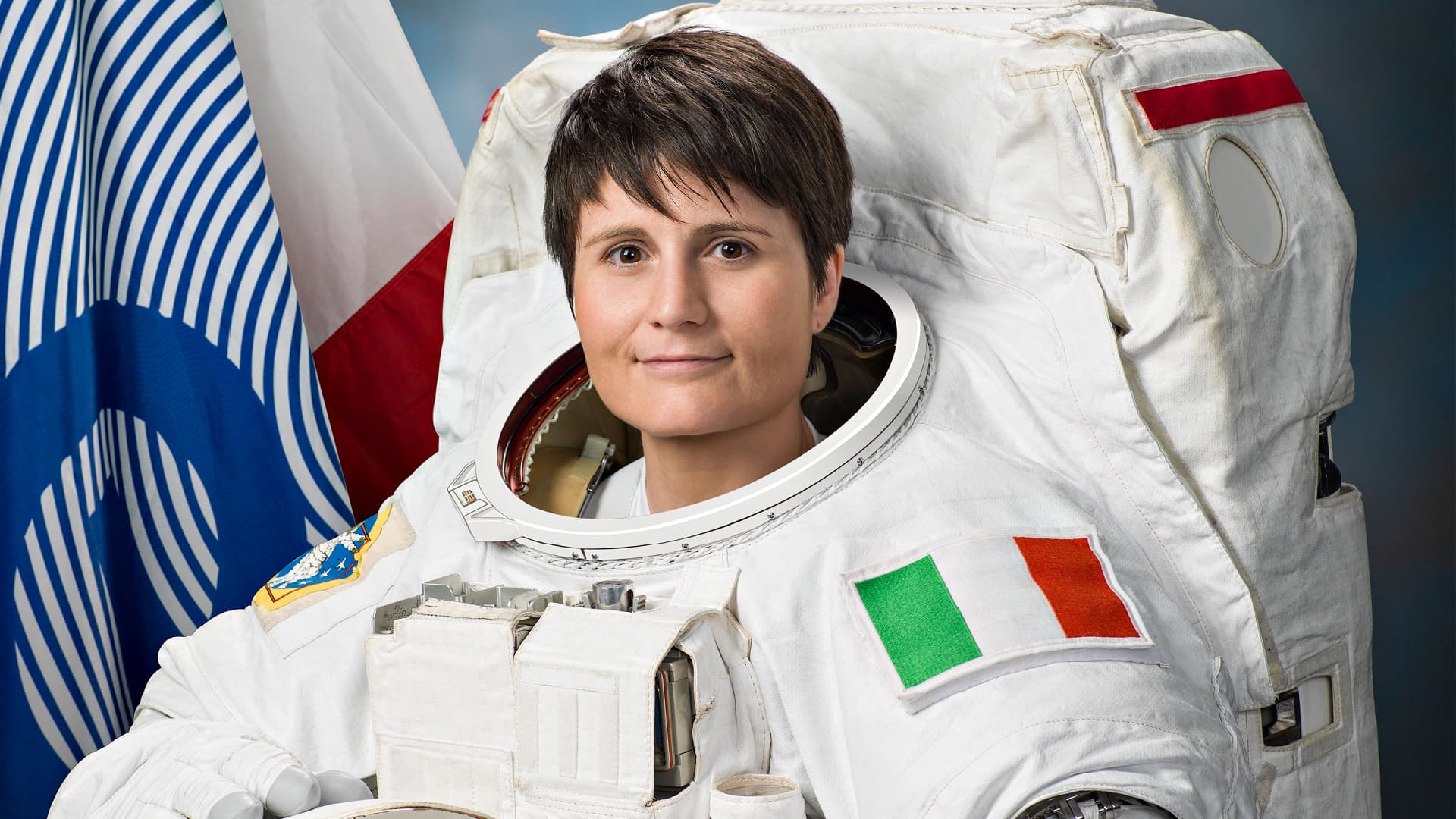
Samantha Cristoforetti (NASA/Robert Markowitz)
A Coratina is meant to enhance meals with a robust flavor, while the Moraiolo was chosen for use with meat. The Itrana monovarietal will be used for their salads and Carolea for fish. Each extra virgin olive oil container will be labeled with its best food pairings.
“The extra virgin olive oils that will be sent to the ISS are of the highest quality, coming from different regions of Italy,” Nicola di Noia, Unaprol’s general director, told Olive Oil Times.
“The seven extra virgin olive oils, three destined to the bonus food and four to astronaut’s meals, have been chosen among tens of tested samples because of their chemical-physical and organoleptic characteristics,” he added.
Di Noia said that monocultivar extra virgin olive oils were selected over blends to demonstrate the organoleptic qualities of different olive varieties, all of which are characterized by a “very high natural antioxidant profile.”
According to the Italian Council for Agricultural Research and Agricultural Economy Analysis (CREA), which is among the partners in the project, the 50-milliliter plastic bottles used for storing the extra virgin olive oils will be the same containers used on the ISS for other foods.
“The containers will also be used to store the extra virgin olive oil samples that have been selected to be the focus of the specific scientific experiment that will be carried on the International Space Station,” Enzo Perri, the director of the CREA research center for olives, fruit and citrus crops, told Olive Oil Times.
The experiment will allow researchers to understand how olive oil contents and profile might change in space. Some extra virgin olive oil samples will be brought back to Earth after six months, 12 months and 18 months on the ISS.
“We will use the same food containers used for all other foods on the ISS because that will allow us to establish changes that occurred in normal operating conditions,” Perri said.
Back on Earth, the international scientific team will study the chemical profiles of each extra virgin olive oil sample to establish possible changes that took place in space, Perri said. The oils will also be tasted to determine how their quality was impacted by the time spent in space.
Cristoforetti is a strong supporter of a balanced diet. Sharing her experience with food on the ISS in 2015, she explained how relevant it is to consume the best fats in her diet. She specifically praised avocado, mackerel and extra virgin olive oil.
“I would not forget to bring olive oil with me, which also gives flavor to anything, even to the rehydrated salads that we eat up here,” she said.
The Italian Space Agency emphasized the importance of the principles behind a nutritional diet.
“Those are basic principles in space, where the correct food intake is a major issue for health aboard the ISS,” the agency said. “Many scientific papers have proved the health benefits of extra virgin olive oil consumption.”
“The extra virgin olive oils selected by Coldiretti and Unaprol all share a high antioxidant profile which is specifically relevant for those who are facing psychophysical intense stressing conditions, such as astronauts,” the agency added.
Samantha Cristoforetti is scheduled to arrive on the ISS on April 15, 2022, in a SpaceX Dragon capsule.