Olive Oil Production Gives Back to Environment More than it Takes
The latest research indicates that the carbon sink effect from olive trees in the biomass and soil is much higher than greenhouse gas emissions from production.
The significant number of scientific studies that have found powerful links between extra virgin olive oil and human health keep on coming, and the International Olive Council’s (IOC) June 2016 newsletter reports another exciting win-win, this time for the environment.
Our message could be that olive oil is both healthy and good for the environment.
The latest research indicates that olive oil production as a whole gives back to the ecosystem more than it takes. “We now have evidence that when the appropriate agricultural practices are adopted, the carbon sink effect (or carbon sequestration) from olive trees in the biomass and soil is much higher than the greenhouse gas emissions from the production of one unit (one liter of virgin olive oil or extra virgin olive oil),” the report states.
Council members plan to create a proposal for a conference on the carbon sink effect of olive trees to be presented at COP22, a United Nations conference dedicated to climate change to be held in Marrakech in November.
That protection of this crop and consumption of its oil is a positive for the environment makes their very existence an ally in the fight against climate change. It’s “precisely the message the IOC wishes to share,” the IOC said. “Our message could be that ‘olive oil is both healthy and good for the environment.’”
The proposal will be drafted at the IOC’s upcoming meeting in Hammamet, Tunisia. The 27th extraordinary meeting begins July 11.
The council praised Tunisia as an active and valuable founding member of the IOC, contributing to research and development in the field of olive oil chemistry for 60 years. Tunisia, along with Belgium, France, Greece, Israel, Italy, Libya, Morocco, Portugal, Spain and the United Kingdom is a signatory of the first International Olive Oil Agreement, drafted in 1959.
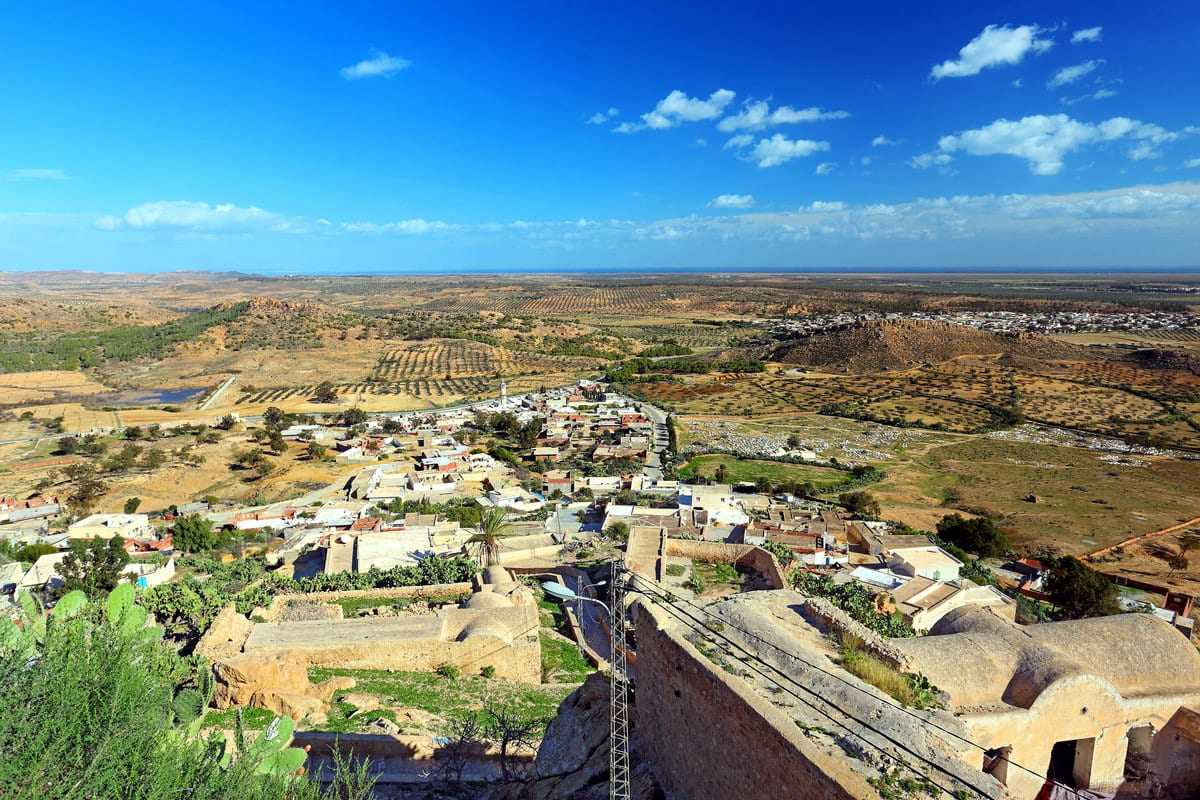
Olive groves in Takrouna, Tunisia
Today, the country boasts the second-largest olive-growing area in the world after Spain, with some 800 million olive trees accounting for a full sixteen percent of world olive acreage.
“Olive growing is one of Tunisia’s main agricultural activities. It plays a fundamental social and economic role, given that sixty percent of the country’s farmers work in this area and draw all or part of their revenues from it,” the newsletter stated, also noting that the country is the second-largest exporter worldwide after the European Union.