The leading American olive oil producer is sourcing oils from South America in its continuing pursuit of market share.
California Olive Ranch is focusing on growing its market share by expanding its product range to include high-quality olive oils made in California and other countries, such as South America. The company’s recent limited-edition release, Americas Blend, features a mix of Californian and South American oils, reflecting their commitment to increasing the quality of extra virgin olive oil worldwide.
For the largest American olive oil producer, California Olive Ranch (COR), it’s all about growing: not olives, but market share.
Instead of slugging it out with smaller competitors for the limited supply of expensive homegrown fruit, the Chico-based company led by CEO Gregg Kelley is continuing its emergence as a marketer of high-quality olives oils made in California — and elsewhere.
COR raised eyebrows a few years back when it acquired the award-winning Italian brand Lucini at a time when bad-mouthing the quality of imported olive oils was practically a sport in the local industry.
The Lucini acquisition signaled that COR had its sights more on sales growth than emphasizing the American pedigree of its product range. “Our love of high-quality extra virgin olive oil extends beyond California,” the company affirms on its website.
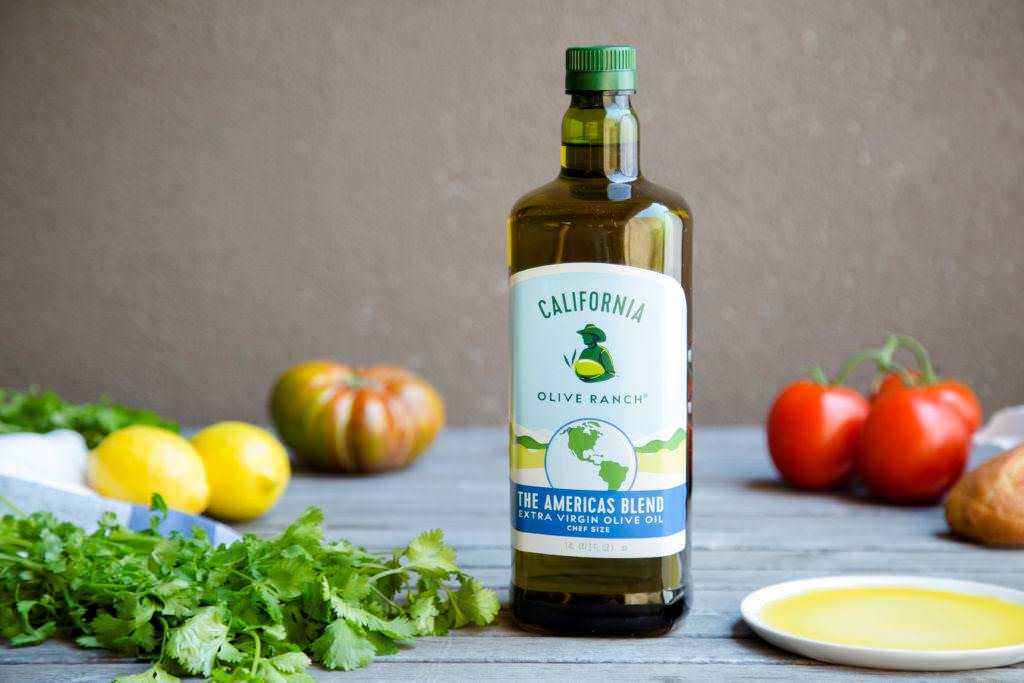
Now, COR, whose sales reportedly exceed $100 million, has announced a limited-edition release of its new Americas Blend, made with South American oils that will be available through December in a 1.4‑liter “Chef Size” bottle.
The Americas Blend results from COR’s partnerships with producers in South America — including Argentina, Peru and Chile — and features “fifty percent Californian and fifty percent South American extra virgin olive oil,” coming together to create a “mild fruity flavor with approachable bitterness,” the company said.
“We value the sharing of process and information amongst producers in order to increase the quality of extra virgin olive oil throughout the world,” said COR, which has thrown its considerable weight behind a strategy which acknowledges that quality olive oil, and higher profits, have no boundaries.
More articles on: Argentina, California olive oil, California Olive Ranch
Jun. 19, 2025
Low Harvest, Rising Production Costs Continue to Plague Argentina
With olive oil production projected to decline for a second-straight year, some Argentine exporters see an opportunity in the changing local trade landscape.
Jul. 7, 2025
Europe Continues to Liberalize Imports While Export Uncertainty Grows
As the United States considers more tariffs on European Union agricultural imports, including olive oil, another group of European countries removed tariffs on the Mercosur.
Nov. 17, 2025
The Opportunities and Challenges of Colombia’s Olive Oil Market
Olive oil consumption in Colombia has nearly doubled in five years. Yet importers say consumer education and high logistics costs limit the market’s potential.
Dec. 18, 2025
France Casts Doubt on E.U.-Mercosur Trade Deal as Farmers Push Back
France has called the E.U.-Mercosur trade agreement “incomplete,” raising new doubts about the long-negotiated deal as farmers across Europe warn of unfair competition from South America.
Nov. 21, 2025
Against the Odds, Colombia’s Only Olive Farm Turns to Tourism
After decades of experimentation, a pioneering family has defied Colombia’s subtropical climate to produce small quantities of extra virgin olive oil.
Feb. 3, 2025
Century-Old California Table Olive Canner Faces Permanent Closure
Extreme weather events and financial challenges mean Graber Olive House might have canned its last batch of its iconic table olives.
May. 1, 2025
How Farmers in Peru and Chile Work Together to Stop the Fruit Fly
Twin towns Tacna and Arica share family ties and trade dynamics, but face challenges with a recent fruit fly outbreak. Efforts are being made to prevent further damage and protect olive producers.
Mar. 17, 2025
As U.S. Firms Back Off Climate Targets, Olive Oil Companies Stay the Course
Olive oil producers and bottlers are continuing efforts to improve their sustainability, even as some of the country’s largest firms distance themselves from climate action.