New Approaches to Branding Croatian Olive Oil
At the International Symposium on Olive Oils of Croatia and the Adriatic Coast, experts called for coordinated efforts to position Croatian olive oil more strongly on global markets.
Postira, Croatia — Croatian development and branding expert Mira Lepur presented her vision for positioning the country’s olive oil sector on the global stage during the International Symposium on Olive Oils of Croatia and the Adriatic Coast, held last week in Postira on the island of Brač.
Lepur, who has spent much of her career managing European development projects while remaining active in her family’s olive oil business, argued that Croatia’s producers must be viewed within a global context.
“Even when we sell in domestic shops, we are competing internationally,” she said. “On local shelves, Croatian oils stand alongside Spanish, Italian, Greek, Tunisian, Chilean and Australian products.”
She added that Croatia’s annual tourism influx of nearly 16 million visitors provides another direct link to international markets. “Every bottle that leaves with a tourist becomes a small ambassador of Croatia abroad,” Lepur said.
Croatian Success on the World Stage
In her presentation, Lepur connected her professional background in strategic planning and territorial branding with her family’s long involvement in olive oil production. Their Lepur brand has been recognized at the NYIOOC World Olive Oil Competition.
She noted that Croatian producers continue to distinguish themselves at the world’s most important olive oil contest, winning 125 awards this year — 101 gold and 24 silver — out of 1,244 entries from 28 countries. Based on the percentage of awards compared to entries, Croatia ranked among the most successful countries.
From European Institutions to the Olive Grove
After more than 16 years of study and work abroad — in Germany, France, and Belgium, including a decade in Brussels — Lepur returned to her native Šibenik. She later led the Šibenik-Knin County Development Agency for eight years before founding her own consultancy focused on strategic development and branding.
Alongside this work, she remains closely tied to her family’s groves in northern Dalmatia. The Lepur farm also operates a modern mill and was recently included in Flos Olei, the annual international olive oil guidebook.
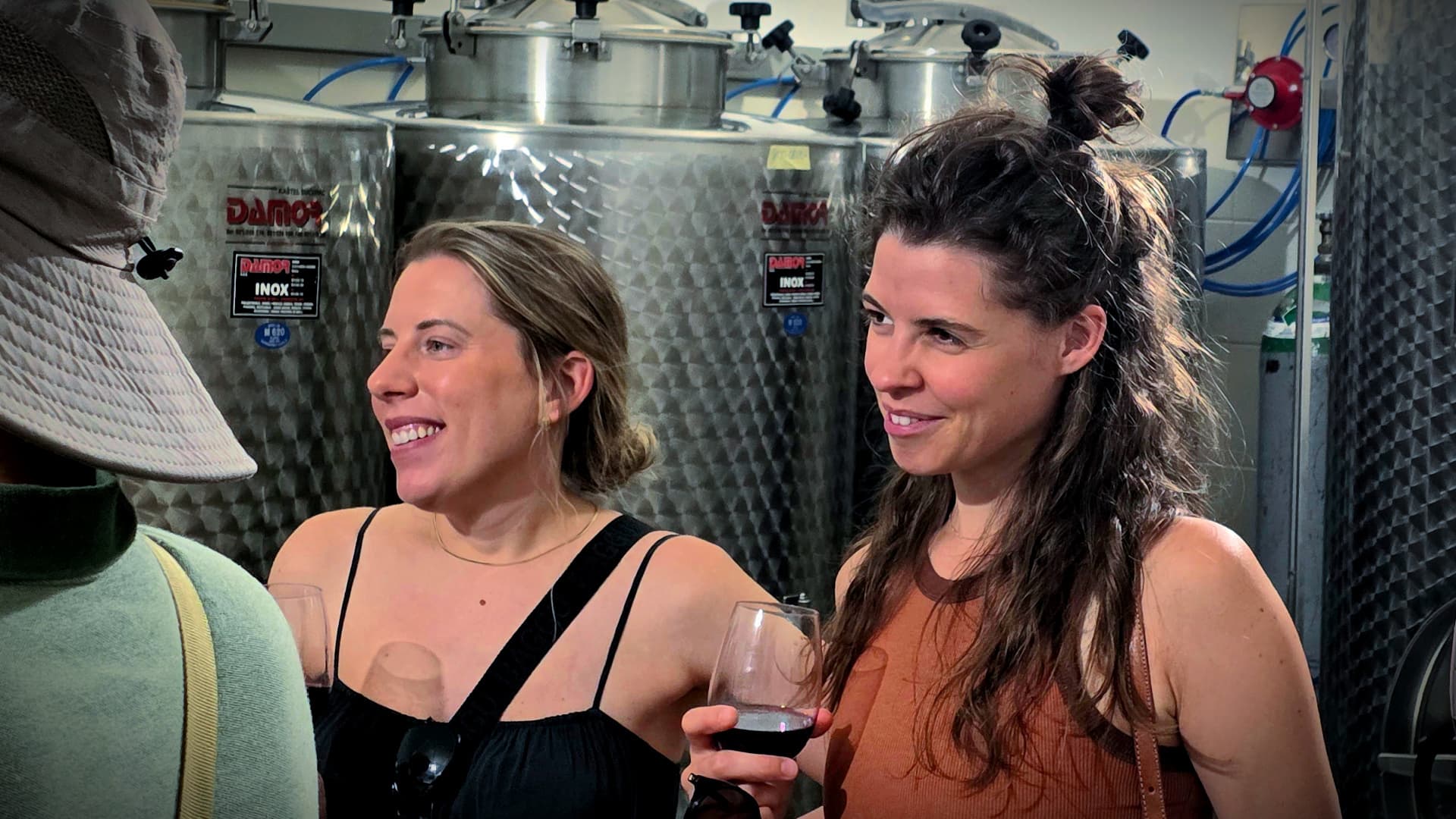
A group of visitors from the U.S. at the Lepur olive mill. (Photo: Mira Lepur)
“This year, for the first time, we opened our groves and mill to visitors from around the world, from North America to Asia,” she said. “Tours of the groves, presentations of native Dalmatian varieties and milling demonstrations attracted strong interest.”
A Branding Challenge
At the symposium, Lepur called for Croatia to strengthen olive oil branding through coordinated strategies that highlight quality, heritage and sustainability.
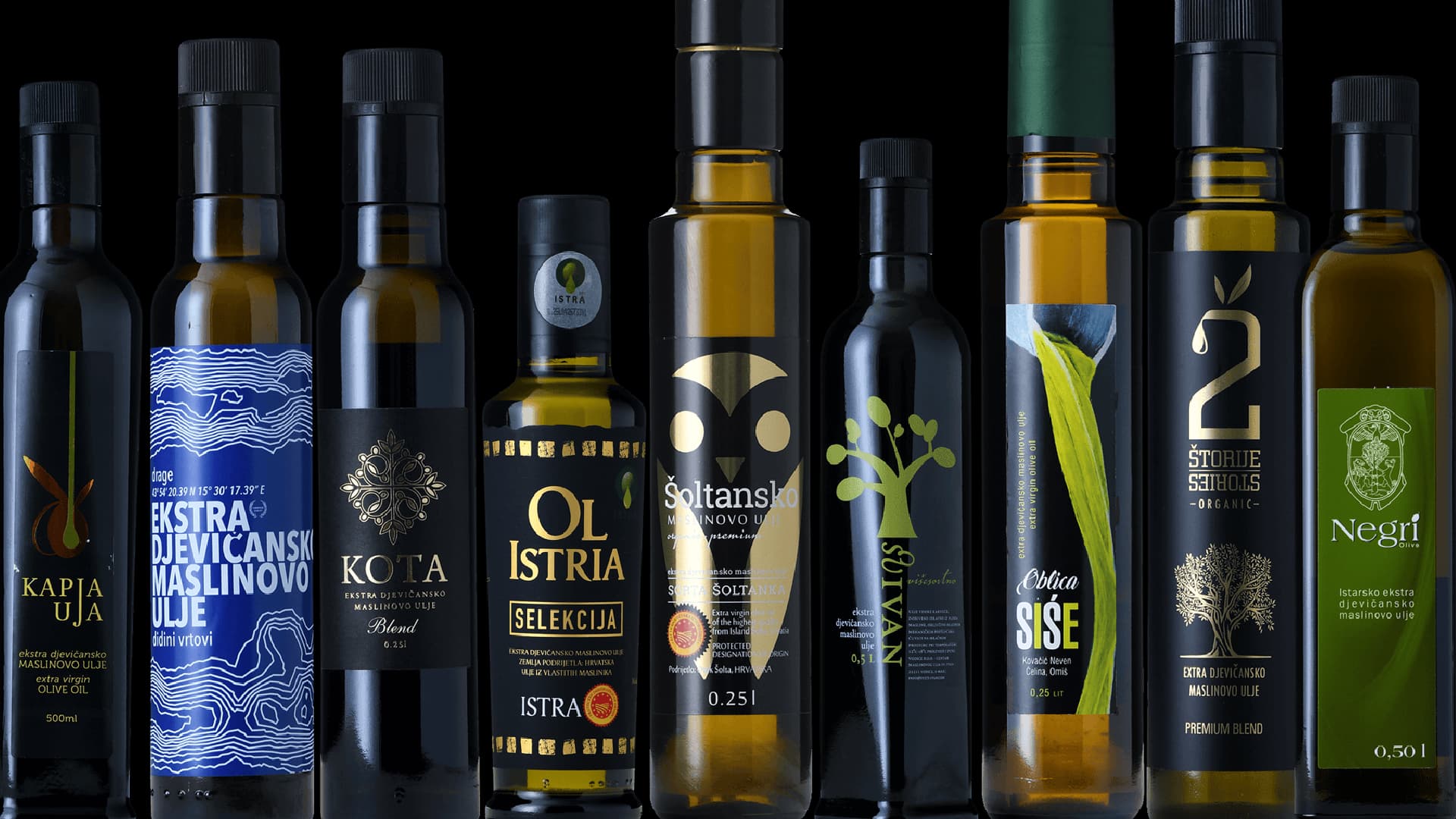
Croatian olive oils have seen a dramatic rise in quality. (Photo: NYIOOC)
“Olive oil is not just food, but part of our identity,” she said. “Each bottle carries a story of the land and people behind it.”
She emphasized several priorities:
- investment in infrastructure such as olive routes linked with cultural and cycling trails;
- upgrading mills with tasting rooms and educational centers;
- developing professional events, from young oil festivals to cultural programs in groves;
- introducing school programs on olive oil;
- training chefs, guides and tourism professionals as ambassadors;
- and expanding digital promotion, including interactive maps and multimedia storytelling.
Lepur stressed sustainability as the foundation of future growth. With greater support for ecological practices and new technologies, she said, olive oil could be positioned as a model of green production.
Toward a National Strategy
She also called for a national strategy to define goals for production, research, sustainability and branding.
Italy’s recognition of “oleotourism” in law, she said, provides a valuable example of how agriculture and tourism can be linked to create added value. A similar framework in Croatia, developed with input from growers, mills, local governments and tourism boards, could strengthen the sector.
A step in that direction came in Postira, where four Dalmatian associations announced plans to join forces under a new club, Oleum Primum Dalmaticum, and pursue a stricter “Ultra Virgin” olive oil category.

A panel on branding Dalmatian Ultra Virgin Olive Oil at the Postira Symposium
“Such initiatives show the potential of bottom-up energy in our sector,” Lepur said.
She concluded that Croatian olive oil may never compete with global leaders in terms of volume, but it can stand out through its quality, authenticity, and cultural identity.
“Croatia will not win with liters, but it can win drop by drop,” she said.