Historic Award for Iranian Olive Oil Producer Comes as Conflict Shuts Down Business
Saeed Shahmoradi became the first Iranian producer to win at the NYIOOC, but celebrations were quickly overtaken by conflict, business closures and deepening economic uncertainty in Tehran.
“It’s a tough time, and it was nearly too difficult to connect to the internet for our conversation today,” Saeed Shahmoradi told Olive Oil Times from the besieged Iranian capital, Tehran.
The founder of Orum Araz Nikdaneh recently became the first Iranian olive oil producer to win an award at the NYIOOC World Olive Oil Competition, earning a Gold Award for its Razbon brand, a blend of Arbequina and Koroneiki olives.
No sooner had Shahmoradi learned of the achievement than the United States and Israel began bombing Iran.
While Orum Araz Nikdaneh’s 50 hectares of olive groves are in the northeastern province of Golestan, where Shahmoradi is from, the company’s main office is 400 kilometers away in Tehran.
“It’s really chaos at the moment,” Shahmoradi said. “You hear the loud sounds of the bombs and missiles throughout the day and night. [On Sunday,] a missile landed maybe 50 meters away from our office building.”
“Everything is shut down now,” he added. “Our factory is closed. Our office is closed. People are staying at home and there are no sales. Zero.”
Shahmoradi entered the olive oil business after a previous career as an industrial engineer and project manager in the oil and gas sector.
He said he was drawn to the mechanical side of olive oil production and believed his technical background would give him an advantage.
Shahmoradi entered the NYIOOC to receive feedback from the competition’s judges on the quality of his oil, hoping to use their assessment to keep improving.
When the news of the award arrived, he said the entire team was “extremely happy” and immediately saw the recognition as a way to persuade skeptical customers to choose their oil over imported rivals.
“Every time we talked about our product’s quality, people said, ‘Well, everybody says that about their product,’” Shahmoradi said. “Before, we didn’t have proof, but now we can show them that the oil was recognized at the world’s best olive oil competition.”
“This is a big event for us,” he added. “I see it as a catalyst that pushes us to elevate ourselves. It also helped prove that our olive oil is value for money.”
Shahmoradi said the award should also help deepen consumer trust in the brand, which he sees as essential to increasing sales of olive oil in Iran.
This year’s Gold Award followed a fruitful harvest in Golestan province. According to the International Olive Council, Iran was forecast to produce 62,000 metric tons in the 2025/26 crop year, slightly below the previous year’s total and the five-year average.
Shahmoradi said the foundation of his award-winning success was an early harvest in late September and early October. The green fruit was quickly transported to a nearby mill, and the resulting, cold-extracted extra virgin olive oil was pumped into a cool, dark storage room.
The blend of Arbequina and Koroneiki olives, which Shahmoradi said are among the most common varieties in Golestan, is mild, with a strong aroma of freshly cut grass.
He said Iranians are generally familiar with olive oil, and there is already a culture of cooking with olive oil. Even so, many consumers still struggle to distinguish high-quality extra virgin olive oil from lower categories.
While Orum Araz Nikdaneh sells its oil in supermarkets and hypermarkets, Shahmoradi believes the best way to build the business is through direct relationships with customers.
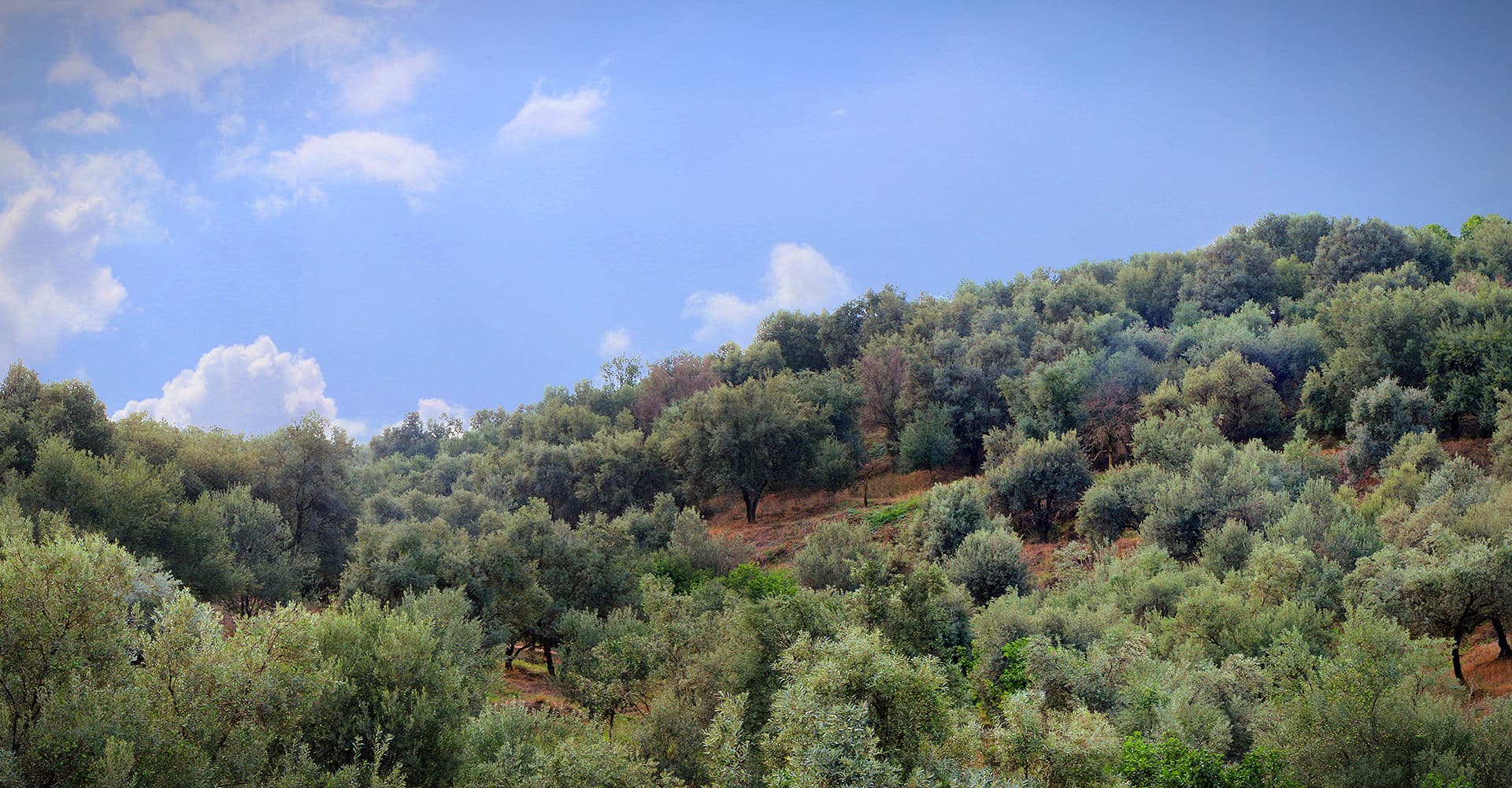
Shahmoradi has 50 hectares of Arbequina and Koroneiki olive groves in the northeastern province of Golestan. (Photo: Saeed Shahmoradi)
“We have also invested a lot in our online shop because we want to have a direct relationship with the end customer and have the chance to receive their feedback,” he said.
“Gradually, people find a brand they trust and stick with it,” Shahmoradi added. “Like in any other business, we must be patient.”
The company also sells on Digikala, Iran’s largest online retailer. According to Shahmoradi, its olive oil is frequently the top seller on the site, often described as the “Amazon of Iran.”
But the country’s enduring economic crisis has left his production costs significantly higher than those of imported olive oils on supermarket shelves, many of them from neighboring Türkiye.
“The biggest challenge for us is the economic crisis taking place in Iran,” he said. “I keep working because of my interest in olives and olive oil, not my financial interests.”
“Inflation is high, so you can’t rely on prices staying the same,” Shahmoradi added, noting that many businesses buy gold or other assets to hedge against inflation instead of holding local currency. “You can’t always procure the right services either, which is another big challenge in Iran.”
As a result, Orum Araz Nikdaneh targets a niche market of higher-income consumers and believes direct communication is the best way to maintain those relationships and encourage shoppers to pay more for a local product.
“I produce the best quality olive oil I can and then calculate the price,” Shahmoradi said. “So the price is the price. I’m not focusing on price, I’m focused on quality.”
Still, he said, rampant inflation makes it difficult to know how much disposable income Iranians will have in the coming year and whether olive oil will become one of the expenses they can no longer afford.
Unlike many producers elsewhere in the Mediterranean, and unlike Tehran, which faced an urgent water shortage before the start of winter, Shahmoradi said Golestan has not suffered from drought.
He added that labor is also readily available, meaning Orum Araz Nikdaneh has not faced the worker shortages common elsewhere in the olive oil world. Overall, he said, the agronomic challenges have been far less severe than the economic and geopolitical ones.
“But we are not sitting idly,” Shahmoradi said. “We are waiting for the opportunity to start up again and get back into the market,” after the conflict with the United States and Israel subsides.