Innovation Yields World-Class Extra Virgin Olive Oil from Restored Groves of Former Monastery
Zero waste, healthy soil, regenerative agriculture and award-winning olive oil production are the goals of Cultura Viva.
In their third year of professional olive oil production, the husband and wife team behind Cultura Viva are becoming accustomed to award-winning finishes to the season.
Laurence Deprez-Zenezini and Stefano Zenezini recently earned their second-consecutive Gold Award at the 2023 NYIOOC World Olive Oil Competition for the Le Clarisse brand.
Sustainable, environmentally friendly permanent agriculture means studying how to work with nature and its cycles and the available resources.
The couple attributed their success to innovation and their goal of sustainable, high-quality olive oil production. Their approach proved even more crucial than their olive growing experience.
“It is true. We do not have generations of family history in olive oil production to guide us through,” Deprez-Zenezini and Zenezini told Olive Oil Times. “We tend to believe that the absence of such heritage helped us embrace modern farming techniques and innovative solutions, both in the groves and the mill.”
See Also: Producer ProfilesThe company’s co-founders have Belgian and Italian roots and spent decades in the United States, where they live part of the year with their children. They recently completed the Olive Oil Times Education Lab’s sommelier course in New York.
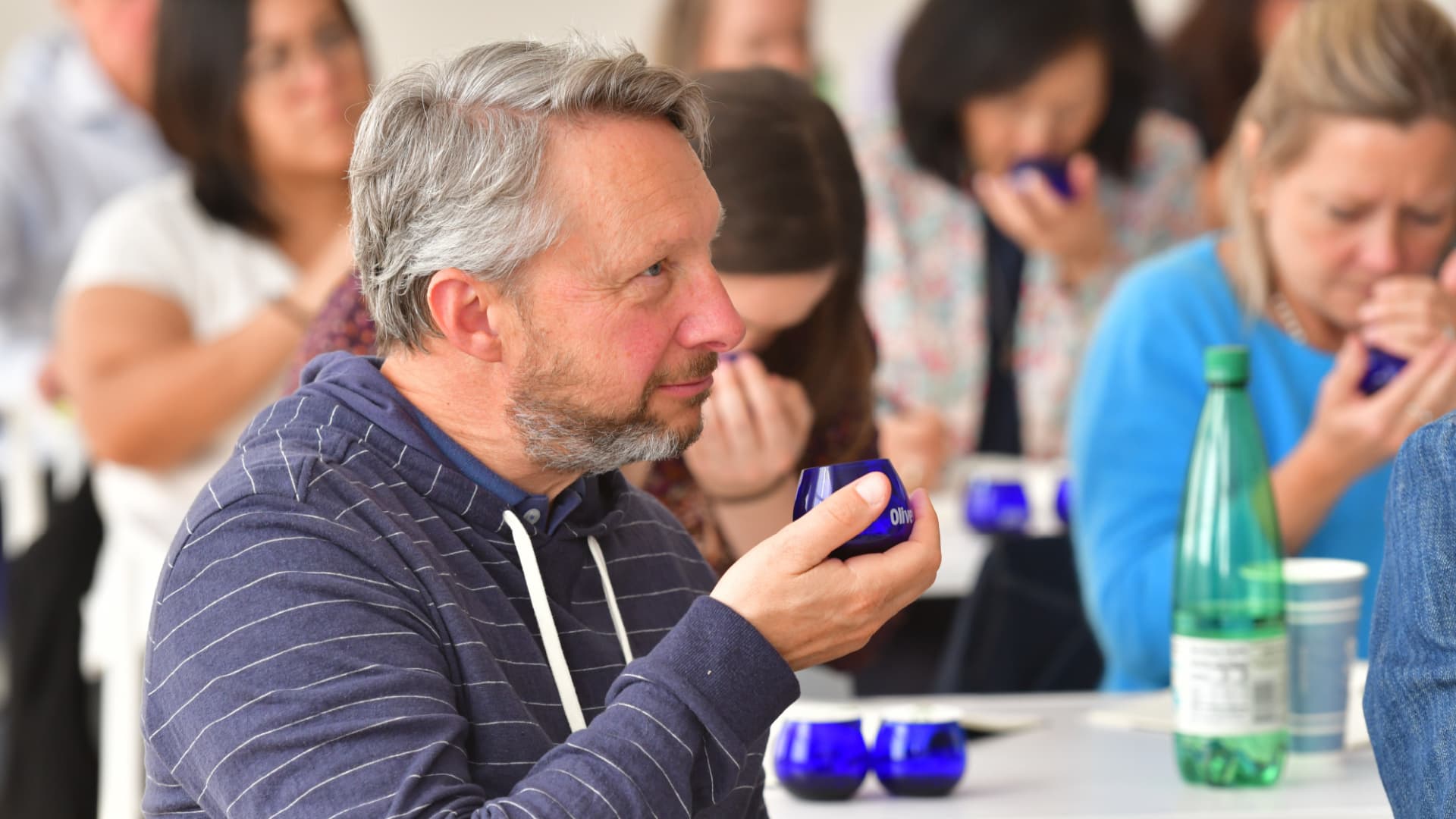
Stefano Zenezini at the Olive Oil Times Education Lab Sommelier Program
Le Clarisse is mainly sold in the United States and is an organic blend of Moraiolo, Frantoio and Leccino olives. It is named after a former monastery that hosts the trees and used to belong to the eponymous order of Catholic nuns.
The evocative name inspired the bottles’ award-winning logo designed by the couple’s daughter, Louise-Audrey. “Ours is a truly family-run company, as you can see,” Deprez-Zenezini said.
The monastery is located in Collazzone, among the Martani Hills, a well-known wine and olive production area in the heart of Umbria.
“Today, the former monastery and the 40 olive trees that circle it is the home of our company Cultura Viva, together with the more than 600 olive trees spread over the hills,” Deprez-Zenezini said.
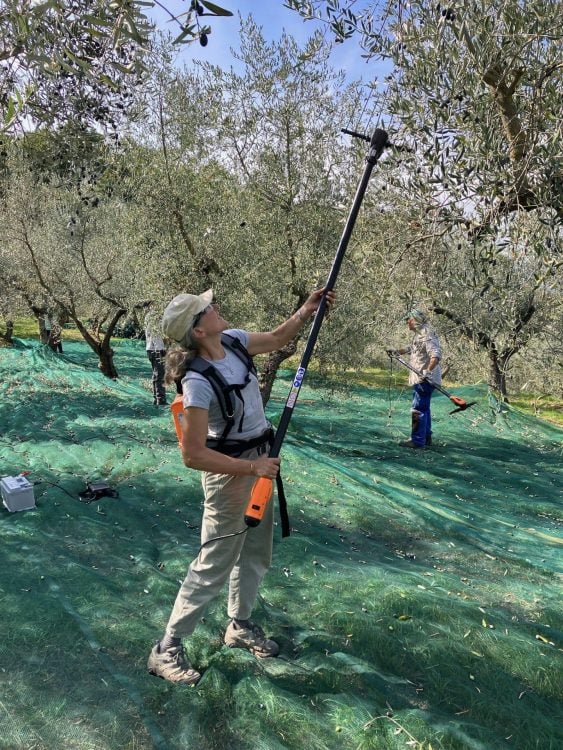
Laurence Deprez-Zenezini
The monastery was built in the 13th Century CE, but its olive grove was scarcely maintained in recent decades. Therefore, it underwent relevant pruning and recovery operations.
“When we began working on it, it had been neglected for a long time,” Deprez-Zenezini said. “Unsurprisingly, many of those trees are centuries old.”
“To those groves, we just added 124 new trees of the Don Carlo cultivar, which will carry new flavors, such as tomatoes,” she added. “So we can already start planning new blends.”
The Don Carlo trees are two years old and covered in white flowers. “The current season seems to be proceeding very well,” Deprez-Zenezini said.
“We are not looking to manage thousands of olive trees,” she added. “Since the beginning, our idea was to only take care of those we could care for by ourselves; that is very important for us.”
A key aspect of Cultura Viva’s organic farming is sustainability and regenerative agriculture, through which they work to preserve natural resources and restore soil health.
“A sustainable, environmentally-friendly permanent agriculture means studying how to work with nature and its cycles and the available resources,” Deprez-Zenezini said.
“For example, when you mow the grass, you leave it there, on the spot, to give nutrients back to the soil, its own resources,” she added. “It means to mow the grass when the time is right, as it can affect soil moisture and fertility.”
According to the Zenezinis, all olive oil operations in Cultura Viva have been imagined and planned following these principles.
“Think of the water resource management. In our orchard, we built swells that follow the hill’s gradient,” Deprez-Zenezini said. “Through them, rainwater reaches areas where a lot of chipped wood and organic material receive the water and store it, just like a sponge.”
“Such infrastructure allows for progressive water infiltration into the soil,” she added. “It is an experiment that we wanted to try given the need to adapt to drought and the effects of climate change.”
“All our efforts in the last three years have been focused on nurturing and restoring the soil in the orchards,” Zenezini said. “An example of this is the field beans we grow, and we have just mowed to nourish the soil.”
“We focus on quality, not quantity,” the couple noted. “But we are also aware that the healthier the trees will be, the more probable it is for their olive oil yield to grow as well.”
A crucial aspect of extra virgin olive oil quality is determined by the olive milling operations, which a third party does. Zenezini said the couple took their time and carefully selected the best mill for their purposes.
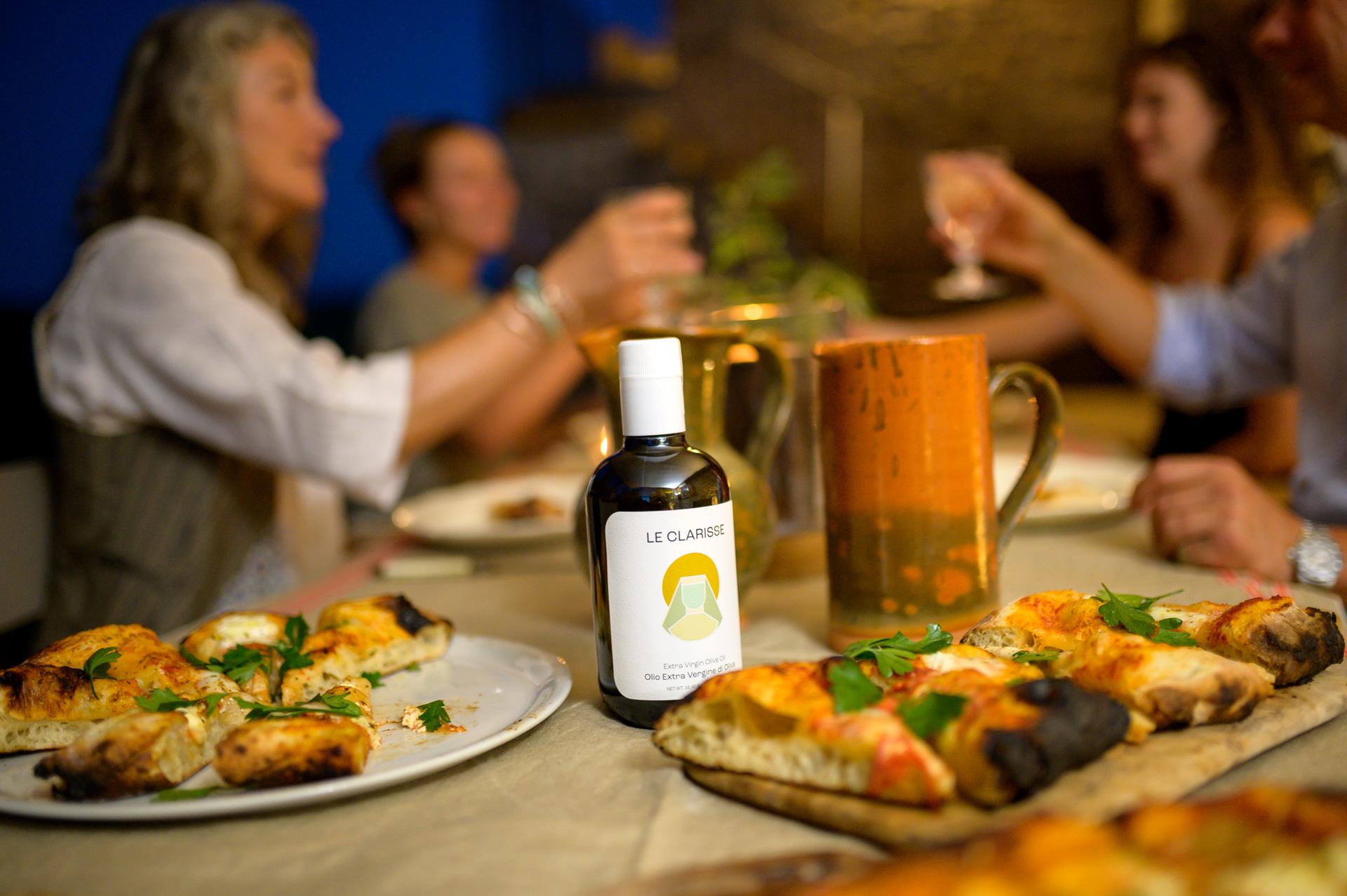
Cultura Viva plans to promote olive oil culture in the U.S.
“It is a local partnership, as we only work with people of the local community,” he said. “It is an exceptional mill, highly innovative.”
“Among the many interesting particulars of the mill is its patented proprietary technology for crushing the olives,” Zenezini added. “It also has an ultrasound apparatus between the crushing and malaxing processes which shortens the kneading times, keeping oxidation at bay, while enhancing olive oil’s flavors and polyphenols.”
Cultura Viva also chose the mill because it does not use water in the milling process and has a zero-waste policy. “It does not produce any waste, as all remains from the olive processing operations go to a biodigester,” he said. “Everything is recycled.”
While the company focuses on sustainable farming, Cultura Viva’s activities are not limited to production.
“With this project, we aimed at nurturing a healthy living approach, made of living in nature, eating quality sustainable organic food and giving back to nature,” Deprez-Zenezini said.
“Not only agriculture but also producing culture out of our recovery and restoration activities in such a beautiful location,” she added, hinting at the incoming launch of special cultural initiatives by Cultura Viva, both in Italy and the United States.
“Think of events such as public olive oil tastings to teach the differences among olive oils, healthy cuisine courses, yoga classes and more on how to stay healthy,” Deprez-Zenezini concluded.