Olive Harvest Underway in Italy
Some producers are already at work, while many others are getting ready for a new olive oil campaign committed to the highest standards of quality.
The olive harvesting season has begun for Italian producers, and while some are already working at full speed, many others are still getting ready and waiting for the right point of ripeness in their fruits.
In western Sicily, at Bona Furtuna, the first drupes of Biancolilla Centinara were picked in mid-September, followed by Nocellara del Belice and Passulunara. At Titone farm, the last week of the month marked the start of the campaign with the collection of Biancolilla.
This year, production is varied depending on the area, as we found a non-uniform amount of fruits on the trees in the different plots, but on the other hand the good weather gave us very healthy olive.
Further north, most of the farmers waited a few more days or weeks to kick-off, with an intensification of activity coming in the second week of October. Over the course of the rest of the month, producers throughout the peninsula will take to the field to begin the 2019 harvest.
In Lazio, Giovanni Gioacchini, the producer of Solum, planned to first collect Caninese for his monovarietal and then continue with Leccino, Frantoio, and Moraiolo for his blend, which was awarded Best in Class at the 2019 NYIOOC World Olive Oil Competition.
“After the last evaluations with our agronomist, we decided to start on October 7,” he said.
See Also: 2019 Harvest NewsIn the territory of Tuscania, on the gentle hills of southern Maremma, Gioacchini’s olive trees are scattered over almost 62 acres of land, alternating with pastures, on a soil rich in volcanic pumice.
“This year, production is varied depending on the area, as we found a non-uniform amount of fruits on the trees in the different plots, but on the other hand the good weather gave us very healthy olives,” Giocchini said.
He added that they made use of irrigation only on rare occasions, since the optimal climate allowed good soil water supply, unlike last year which was much drier.
“Also, the olive fruit fly has not shown up,” he said. “We are confident for this new harvest.”
In the Marche region, at L’Olinda olive farm, which won two awards at the 2019 NYIOOC, Francesco Sabbatini Rossetti planned an early harvest for his plants of Rosciola Colli Esini, Raggia, and Mignola. The family company, which includes a mill and 173 acres of secular and young olive trees, is expanding its production as they recently planted Ascolana Tenera, Piantone di Mogliano, and Coroncina.
“Our olive groves are located in various areas of the province of Ancona with different altitudes, soils, and climate conditions,” he said, explaining that each grove has its own microclimate due to this unique terrain. “Moreover, organic management leads us to great but different results every year.”
“This season, the Mignola plants are in great shape, since this variety is grown at a higher altitude than the other ones, which, due to a different exposure, are still paying for the consequences of the ‘Burian’ cold wave,” Sabbatini Rossetti added, explaining that in the lower, south-facing groves, the vegetative activity of the plants had already started when the cold snap happened, and afterwards the olive trees looked burnt, with serious damage and almost no production.
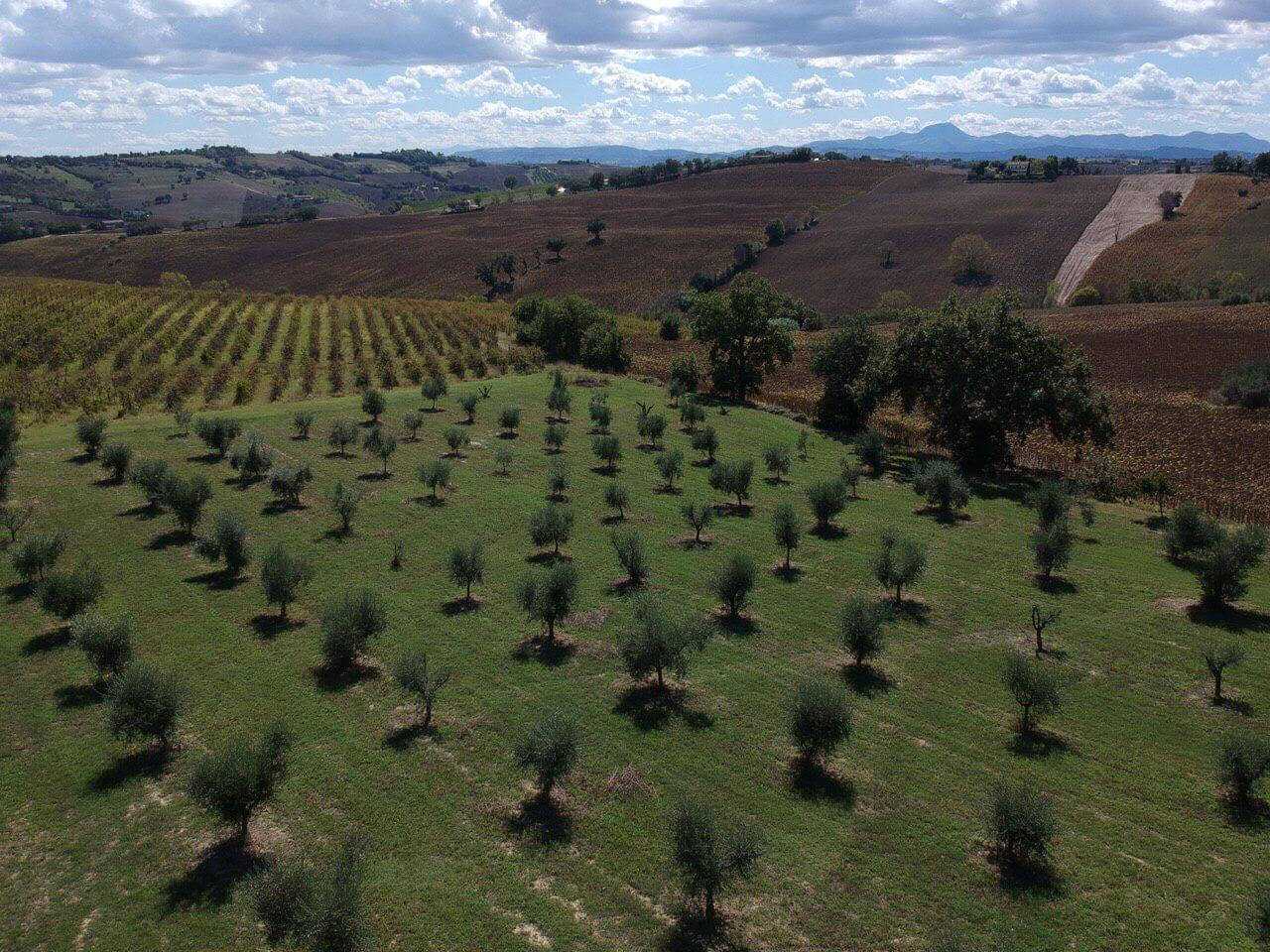
“Despite a slight drop in volumes, we are expecting a great campaign in terms of quality,” he said, “Furthermore, the presence of the olive fruit fly is now under control. We are ready to start.”
Meanwhile, Peranzana and Leccino will be collected in mid to late October on the Adriatic coast of Puglia, at Oilalá farm.
“Coratina, which is a late-ripening variety, will be the last to go to the mill,” Spiros Borraccino said. “Some years ago, for climatic reasons that slowed the ripening process, we picked these fruits in early December. However, this year we had favorable weather conditions thanks to a very hot, low-rainfall summer and a warm September, which have fostered the healthy development processes of the drupes.”
He added that since the rain fell at the right moments, during the warmer months they hardly needed to irrigate the orchards.

“Moreover, a determining factor for the proper development of fruits was the significant difference between day and night temperatures in July and August,” he said. “The day was very hot while at night the temperature dropped by 10 degrees Celsius (50 degrees Fahrenheit), offering ideal conditions for the healthy growth of our fruits.”
Oilalá’s main groves are located in the territories of Barletta and Minervino Murgie, and recently an almost 10-acre olive grove in Valle d’Itria has been added to the property.
“We decided to expand our company and produce more high quality extra virgin olive oil,” the Puglian producer concluded.