How Extra Virgin Olive Oil Elevates Traditional Neapolitan Pizza
One of the world’s most celebrated pizza makers, Salvatore Salvo of Pizzeria Salvo in Naples shares his insights on pairing pizza and extra virgin olive oil.
Pizza is one of the most beloved Italian — more precisely, Neapolitan — dishes. Famed around the world, it is prepared and enjoyed in many styles and according to a wide range of techniques.
Extra virgin olive oil is a fundamental ingredient in traditional pizza, added as a finishing touch to complete the recipe. It can be used on pizzas of every style, playing a key role in elevating the final result.
I imagine it like a stage set, where the oil becomes the structure that supports and reveals the flavors.
“Olive oil is an important element, one that truly makes a difference on a pizza, and it must be used wisely and in a balanced way, just like all the other ingredients,” Salvatore Salvo told Olive Oil Times.
Recognized as one of the best ‘pizzaiuoli’ of his generation, Salvo co-founded Pizzeria Salvo, which for several years has consistently ranked among the world’s best pizzerias.
At his restaurant along Naples’ Riviera di Chiaia, Salvo crafts traditional Neapolitan pizza, refining each creation with high-quality extra virgin olive oils sourced from across Italy.
“I have been selecting oils for my pizzas for 15 years, and I began this research in collaboration with technicians and producers,” Salvo recalled. “Today there is a much broader and growing awareness of quality, but when we started, knowledge of extra virgin olive oil was far more limited. Oil was often described simply as ‘heavy’ or ‘light.’ I decided to introduce a high-quality extra virgin olive oil selection in my pizzeria to elevate my pizzas while helping spread olive oil culture.”
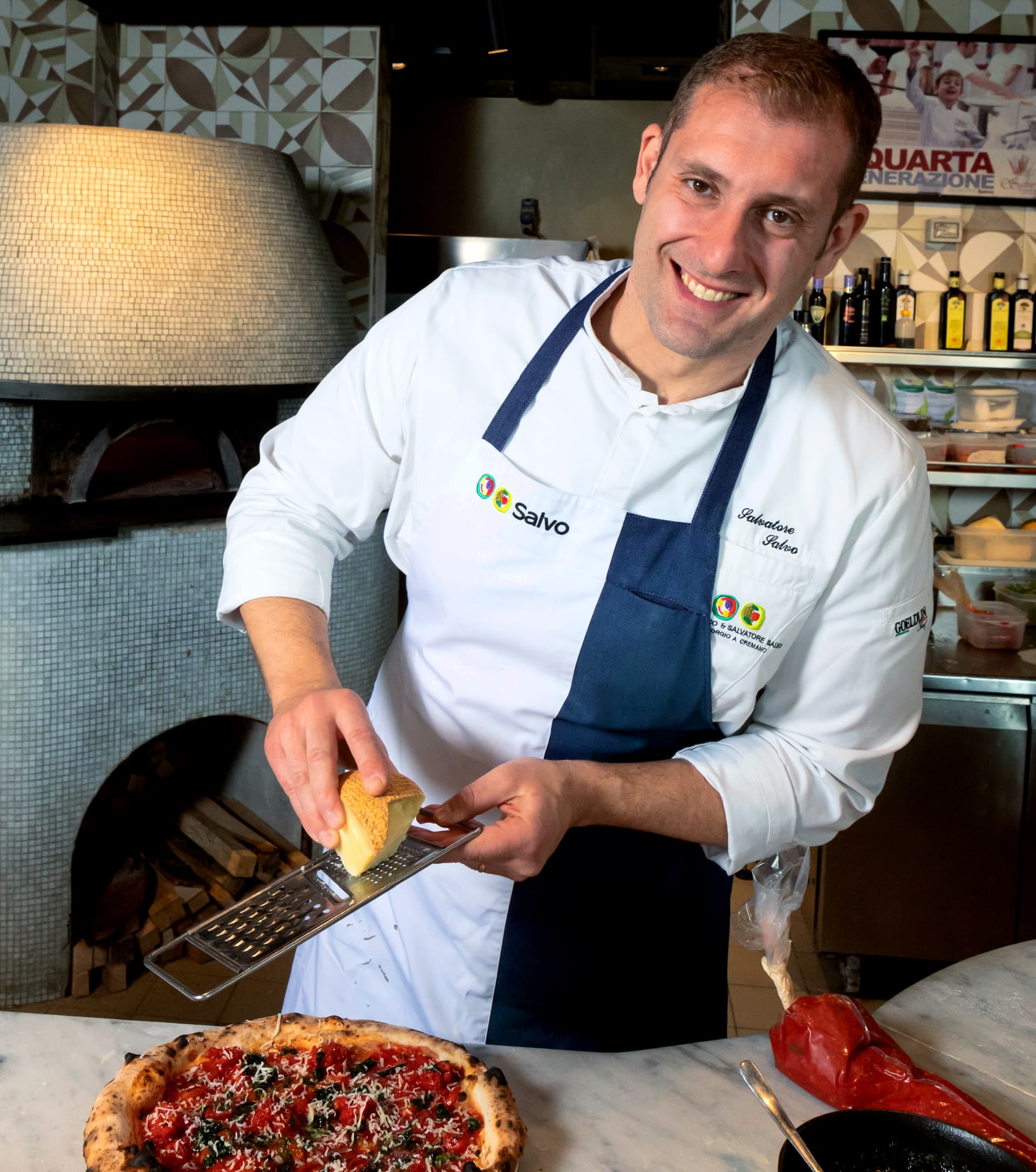
At Pizzeria Salvo in Naples’ Riviera di Chiaia, Salvatore Salvo crafts traditional Neapolitan pizza, refining all his creations with high quality extra virgin olive oils sourced from across Italy.
Just days ago, Pizzeria Salvo released its new menu, featuring 35 pizzas, all paired with extra virgin olive oils from producers across Italy, with a strong presence from Campania.
How to use extra virgin olive oil on traditional pizza
“Choosing a high-quality extra virgin olive oil is the first step to achieving a great result,” Salvo said. “Then we must consider that even an oil we particularly like may be perfect on one pizza and less harmonious on another.”
“For this reason, the second step is to use oil in a way that allows its countless aromas, varying intensities, bitterness and spiciness to come into balance with the other ingredients, from the tomato to the mozzarella and beyond.”
Salvo’s method involves a first drizzle of extra virgin olive oil on the pizza disc, topped with all the ingredients, just before it is placed in the oven. He then completes the pizza with a second drizzle a few seconds after it comes out.
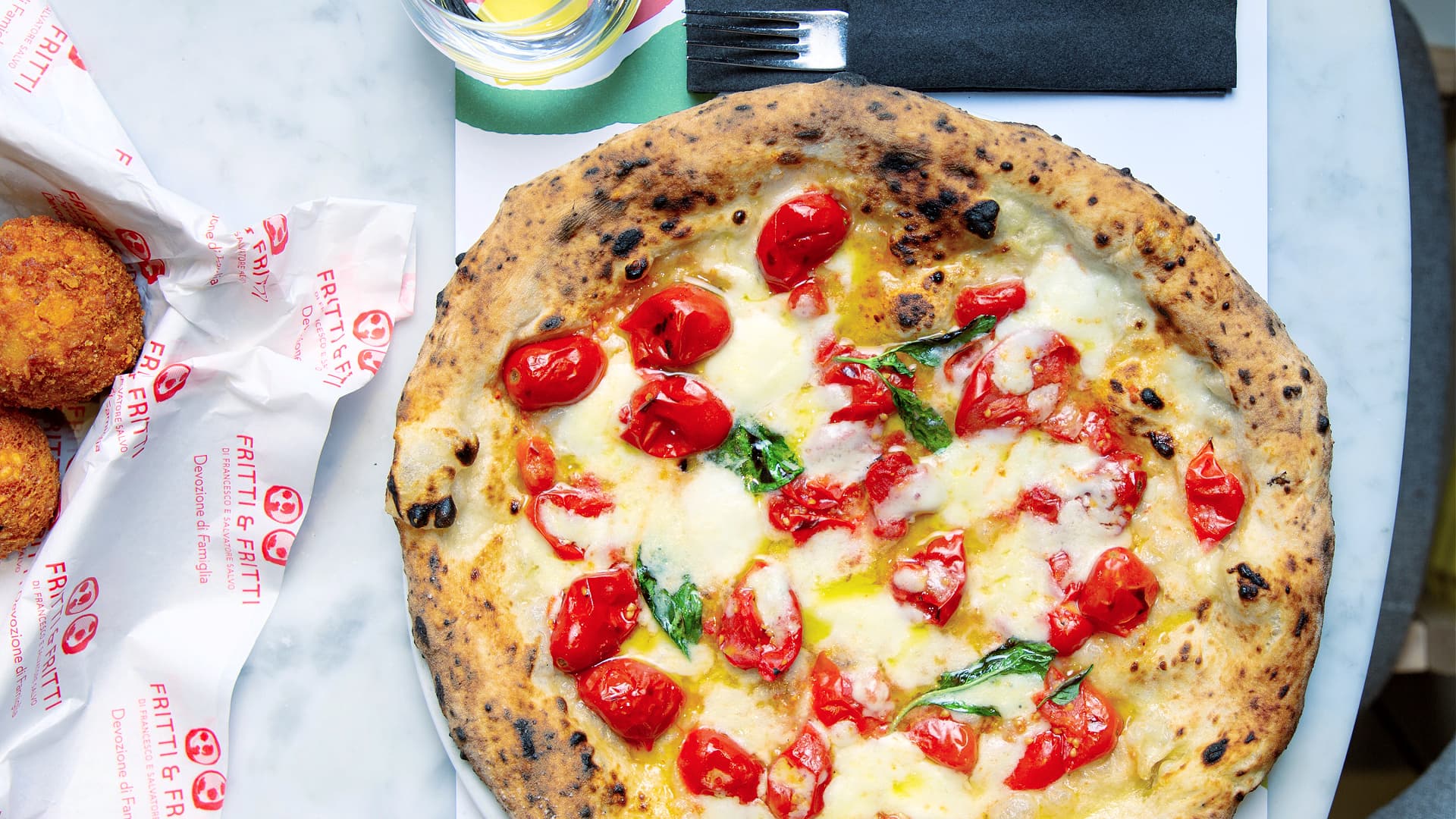
‘Margherita del Vesuvio’ with preserved ‘Pomodorino del Piennolo del Vesuvio’ DOP cherry tomatoes, Campania DOP buffalo mozzarella, an extra virgin olive oil from Campania (Photo Pizzeria Salvo)
“Extra virgin olive oil is the element that finishes the composition,” Salvo said. “For the first drizzle during baking, I usually use a well-balanced blend, adding four to five grams. The second drizzle, applied as the pizza comes out of the oven, measures five to six grams and consists of an oil — either a monovarietal or a blend — selected specifically for that pizza.”
Oil applied during baking helps melt and unite the ingredients, Salvo explained. “Without it, the components remain disconnected. The oil creates a true marriage between the elements.”
“Because high temperatures degrade the aromatic compounds of the first oil, a second oil is essential,” he added. “As the pizza cools slightly, the conditions become ideal for the oil to express its sensory qualities. The warmth amplifies the aromas, and by the time the pizza reaches the table, customers can perceive their full expression.”
Margherita
Salvo has created seven different versions of the globally recognized Margherita pizza.
“My most classic Margherita is made with San Marzano DOP tomato,” he said. “The oil must have a complex fruitiness that integrates with and supports the freshness and acidity of the tomato and Fior di latte mozzarella.”
For this pizza, Salvo often selects Campanian varieties such as Salella and Rotondella, with herbal notes and hints of artichoke, as well as a balanced Ravece with tomato notes. He is currently using a blend developed in collaboration with a Campanian producer specifically for this staple pizza.
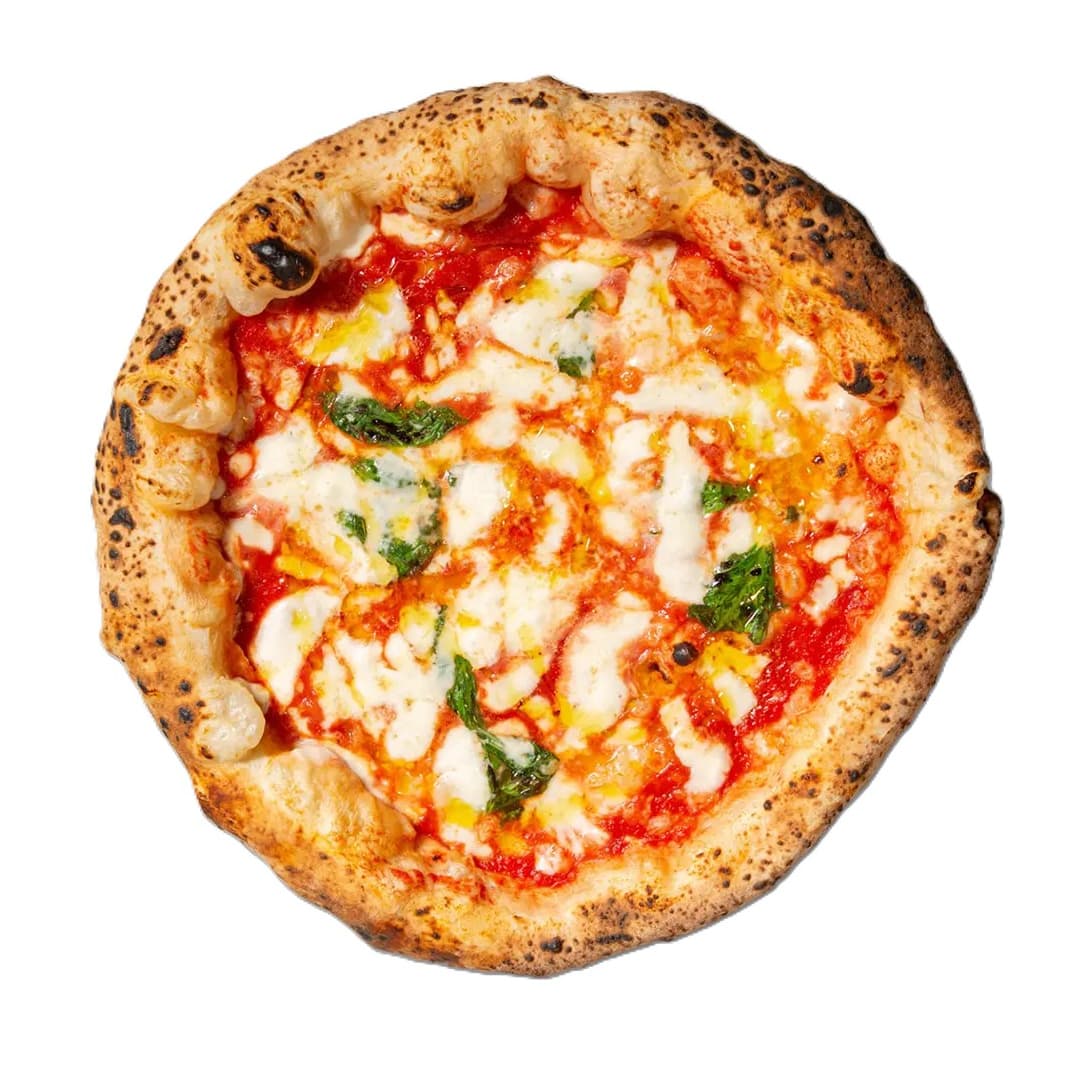
‘Margherita Classica’ with San Marzano DOP peeled tomatoes, Fior di latte, basil, extra virgin olive oil, a blend exclusively created for this pizza with a Campanian producer (Photo by Pizzeria Salvo)
“My Margherita Caramella, made with Datterino Caramella tomato from the foothills of Vesuvius, is particularly sweet, with body and almost no acidity,” Salvo explained. “In that case, I look for an oil with greener notes and a level of bitterness and pungency that helps bring out the tomato’s acidity.”
For this version, he chose a blend of Itrana and Coratina from Campania, with vibrant notes of freshly cut grass, tomato leaf, and artichoke heart.
Capricciosa
Another traditional pizza is Capricciosa, characterized by savory notes of salami and anchovies, along with artichokes and olives.
“This pizza calls for an oil with distinct bitterness that harmonizes the savory elements while enhancing each one,” Salvo said. “I imagine it like a stage set, where the oil becomes the structure that supports and reveals the flavors.” He pairs it with a blend of Apulian varieties, including Coratina and Ogliarola Barese.
Marinara
Salvo’s Marinara — a classic pizza that likely originated in Naples’ port area as a meal for mariners — includes four ingredients: ancient Naples tomato ecotypes, wild oregano, basil and extra virgin olive oil.
For this pizza, he uses an Itrana monovarietal produced in Campania, characterized by balsamic hints of mint, basil and parsley, with notes of tomato, banana and white apple.
“The Marinara is extremely aromatic and needs an oil with complexity, vegetal and balsamic notes, and a spiciness that creates harmony,” Salvo said. “This pizza also needs almost twice as much oil as the others — I would say it has to be over-oiled.”
He finishes it with a double drizzle, reaching at least 10 to 12 grams of oil.
Quattro Formaggi
Salvo’s Quattro Formaggi includes Fior di latte, Ol Sciur (a blue goat cheese aged with red fruits and rose petals), a semi-aged goat’s milk caciotta from Bagnoli Irpino, aged provolone, and goat-and-cow milk robiola.
“With this level of intensity, I choose a very balanced oil with lingering bitter and spicy notes,” Salvo said.
He pairs it with an Umbrian blend of Leccino and Frantoio, offering freshness and complexity with notes of white almond, artichoke, floral and balsamic hints, and touches of white pepper, wild thyme and cinnamon.
Pizza al Pomodoro
The same oil also pairs well with Pizza al Pomodoro, prepared using six different tomato varieties, each processed differently to highlight its character.
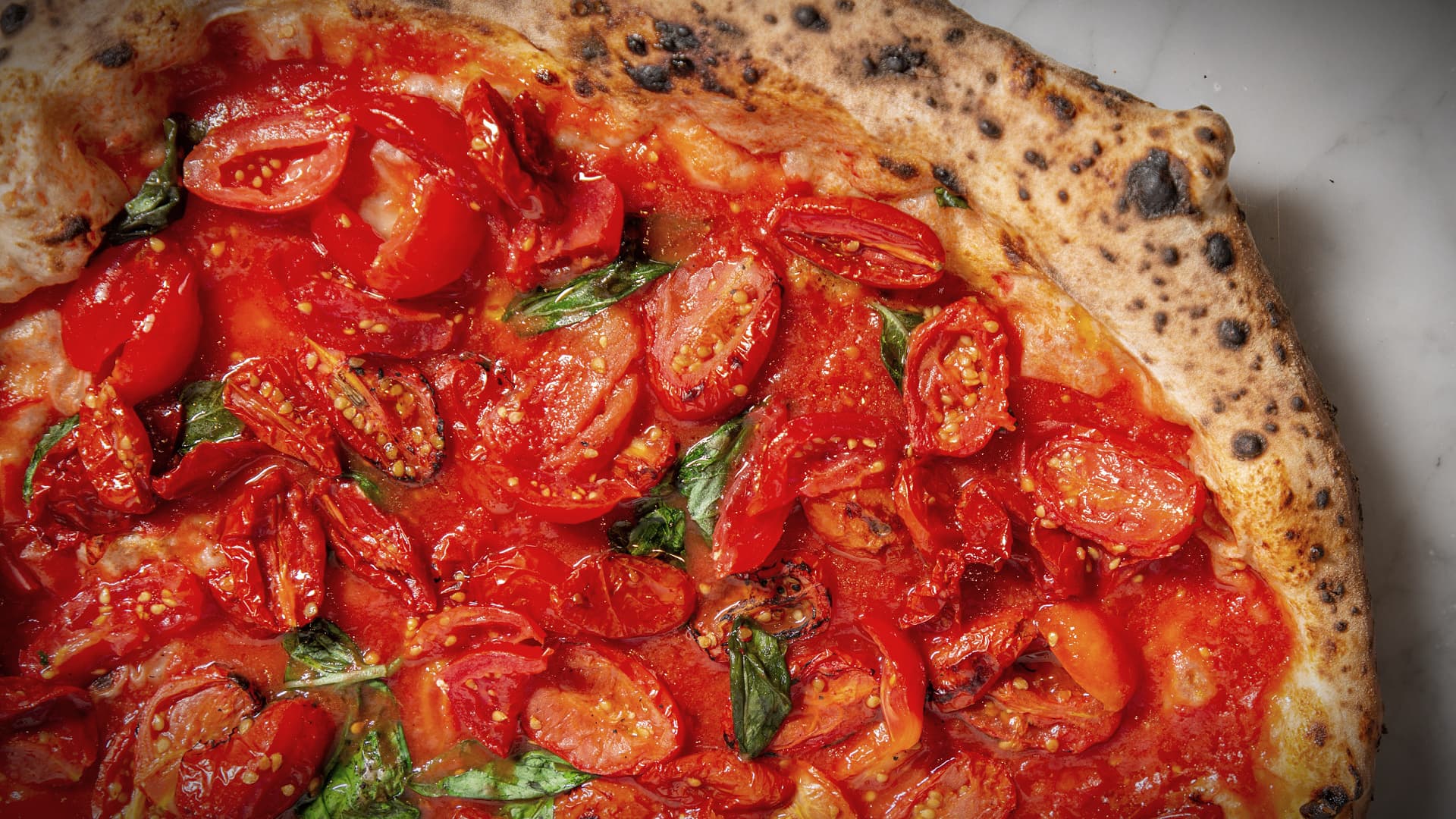
“Here the oil plays a particularly important role, since it’s a very simple, dairy-free pizza,” Salvo said. “This elegant and complex oil creates the verticality I was looking for in its composition.”
Closing takeaways
Salvo emphasized the importance of understanding oils and working carefully on pairings. The oil should not be so subtle that it disappears, nor so bold that it overpowers, but instead acts as a unifying element that enhances all ingredients.
“Some pizzas are savory and intense, others lean toward sweetness or feature the acidity of dairy products — all factors to consider when selecting the right oil,” he said.
At the end of each harvest, Salvo and his collaborators visit producers at farms and mills to taste oils and experiment. They select monovarietals and blends, and sometimes create new blends tailored to specific pizzas.
“Our research never stops,” Salvo said. “Every harvest is different, and every year the oils express new aromatic features. Each time, we discover outstanding products that elevate pizza at its very best.”