Scientists Find Earliest Evidence of Olive Oil in Central Europe
Early Celts in the French region of Burgundy imported olive oil from the Mediterranean around 500 BCE, a new study shows. The find is the earliest evidence of olive oil use in Central Europe.
Archaeologists studying early Celtic remains in France have discovered traces of olive oil on pottery fragments dating from around 500 BCE, providing the earliest known evidence of olive oil use in Central Europe. Previously, the earliest evidence was from the Roman period, several centuries later.
The discovery was made while examining the remains of 99 ceramic vessels from the hill fortress of Mont Lassois in Burgundy, east-central France. Traces of organic substances were found on the vessels, including beeswax, beer, wine, millet, milk and olive oil.
As the sixth century BCE is the first time that Mediterranean pottery was brought to Central Europe in large amounts, I think that it is most probable that we found the earliest evidence.
According to the study, which was published in the scientific journal Plos One in June, the Celts travelled south along the Rhone River to trade with Greek colonies on the French coast, particularly Marseille, bringing back a range of Mediterranean goods. These imports included Greek and Italian pottery, as well as grape wine and olive oil.
The study was conducted by an international team of researchers, led by archaeologist Philipp Stockhammer from the Ludwig-Maximilians-Universität München.
See Also: Olive Oil History“At the moment, this is the earliest evidence, but we are also one of the first to conduct such a large-scale study,” Stockhammer told Olive Oil Times.
“However, as the sixth century BCE is the first time that Mediterranean pottery was brought to Central Europe in large amounts, I think that it is most probable that we found the earliest evidence,” he added.
The early Celts inhabited southern Germany, northern Switzerland and part of eastern France during the Early Iron Age. It has long been known that they traded with Mediterranean communities, adopting not only their goods but also some of their traditions, such as wine-feasting. What was not known until now was that olive oil was among the foreign imports.
While the researchers are confident that the oil was imported from the Mediterranean coast of France, they still do not know where it was produced.
“The imports came via Marseille,” Stockhammer said. “But we have imported vessels from the southern Greek mainland, southern Italy and southern France, all of them possible origins of the olive oil, too.”
Of the 99 vessels examined, 16 were imports, while 83 were made locally by the Celts. According to Maxime Rageot from the University of Tübingen, who conducted the food residue analysis, olive oil was found on both the imports and locally-made vessels, suggesting the Celts actually used the oil.
Rageot used gas chromatography and GC-mass spectrometry analyses in his work. While such technology can identify organic substances with some accuracy, the job is often more difficult with older samples.
He told Olive Oil Times that the issue of degradation, which particularly affects the lipids found in plant oils, means it is difficult to determine how widespread olive oil use was.
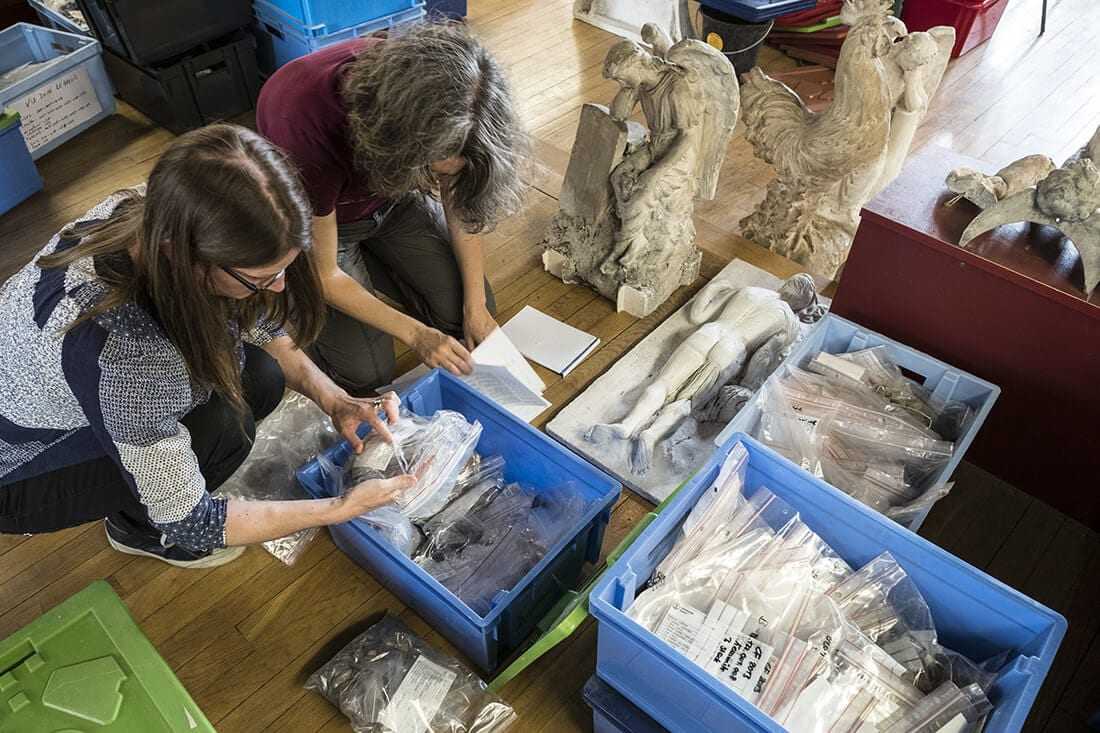
“We have only rarely found evidence of olive oil in archaeological contexts based on organic residues, because the specific molecular markers of most plant oils are not very stable over time, and only in good contexts for lipid preservation,” he said.
“So, it is not yet possible to say if olive oil was commonly imported into central Europe during the Early Iron Age or if it was a rare and very prestigious good restricted to the Celtic elites,” he added.
He said this also poses problems in identifying how the oil was used. While most modern consumers view olive oil as a foodstuff, ancient cultures often found other uses for it.
Stockhammer said that the findings do not indicate how the oil was used, but it was likely for “body embalmment; most probably not for cooking.”
The study is an important addition to history of olive oil, showing how and when it spread north from the Mediterranean. Relatively speaking, the Celts were late in adopting the substance. Archaeologists have found evidence of olive oil production in Israel from around 6,000 BCE, while olives were being gathered by Neolithic peoples in the eighth millennium BCE.
“Olive use in the Mediterranean goes back deep in history,” Stockhammer said. “Although it is difficult to say if they just ate olives and when they started producing oil.”
“Already in the second millennium BCE, we have a large-scale, almost industrial, production of olive oil, especially as a basis for perfume, in Mycenaean, Greece,” he added.