



Meet the Native American Tribe Behind Award-Winning Olive Oil
Over two decades, Jim Etters has helped guide the Yocha Dehe Wintun Nation’s Séka Hills brand to four NYIOOC triumphs while focusing on sustainability.
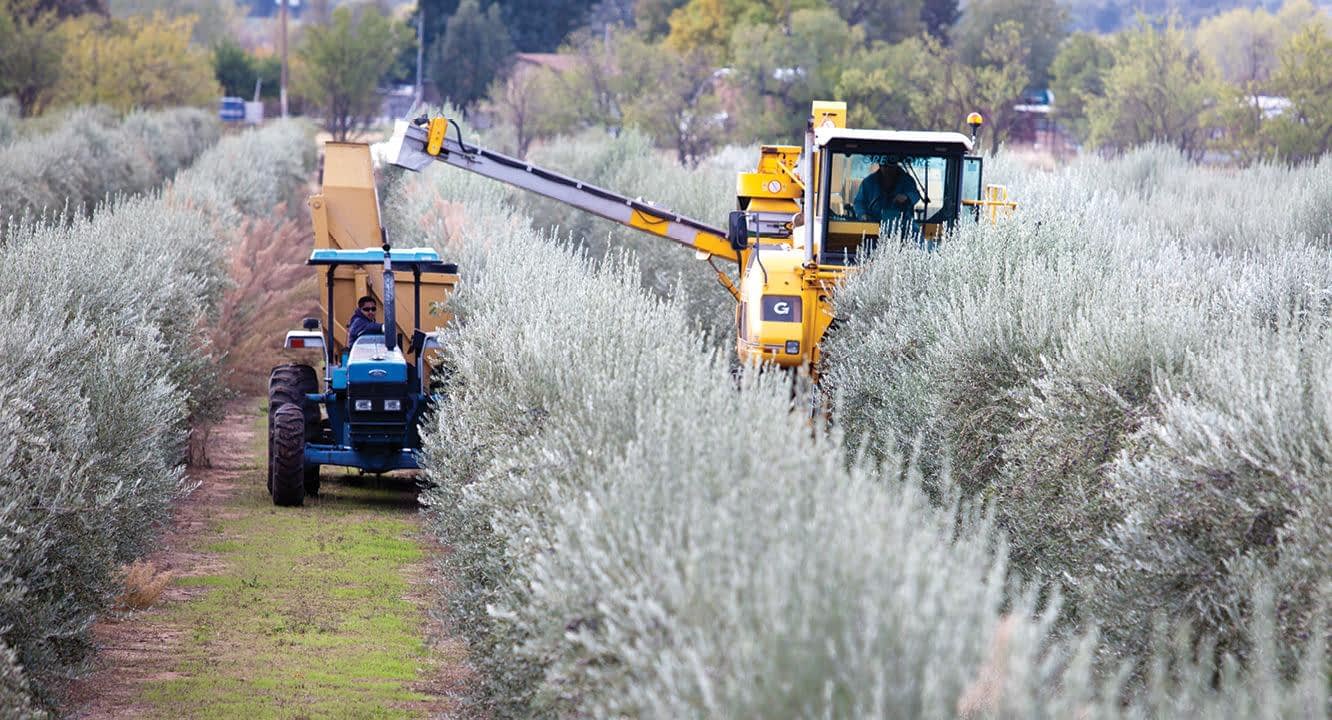
 Harvesting high-density groves in the Capay Valley (Photo: Séka Hills)
  20.0K reads
Jim Etters, director of land management at Séka Hills, led the Yocha Dehe Wintun Nation to win awards for their olive oil production, attributing their success to his first taste of fresh olive oil and the tribe’s dedication to sustainability. The tribe’s journey from leasing land to farming olives, building their own mill, and expanding their olive varieties has resulted in a growing olive oil culture and a successful brand, with hopes for a successful 2023 harvest.
“The first time I tasted fresh olive oil, it was like a life-changing experience,” Jim Etters, the director of land management at Séka Hills, told Olive Oil Times.
Etters has been the mastermind behind the olive oil production of the Yocha Dehe Wintun Nation, a federally-recognized Native American tribe located in the Capay Valley, west of Sacramento, California, from the beginning.
“For sure, the tribal citizens use more (extra virgin olive) oil now than ever before. They get excited about the new harvest and the Olio Nuovo.”
Etters’ and the tribe’s efforts yielded a Silver Award for a medium-intensity Arbequina at the 2023 NYIOOC World Olive Oil Competition. Since 2018, the tribe has won four awards at the world’s most prestigious olive oil quality contest.
Etters attributed the company’s success to his first tasting experience and the tribe’s decades-long learning process and emphasis on sustainability that has always guided its agricultural practices.
See Also:Producer Profiles“I started with Yocha Dehe in 2003 and have had the great opportunity to work with the tribal council to help them build their agricultural enterprises from scratch,” he said. “When I started with Yocha Dehe, they only owned about 1,000 acres (400 hectares) of land other than the reservation, where they live.”
This land was mostly being leased out to tenant farmers, but as the tribe acquired more land over the next few years, they started to make more sense to farm the land themselves.
“It started to make more economic sense to farm the land as far as getting to a scale to invest in equipment and manpower,” Etters said. “But also, the tribe wanted to have control over how their lands were being cared for.”
“When you have a tenant farmer on a year-to-year lease, they take what they can get from the land without putting a lot back, so we started farming completely in-house in 2006,” he added.
After planting staples, the Yocha Dehe Wintun Nation expanded with higher value crops, including olives and grapes.
The tribe began its agricultural initiatives by farming wheat, alfalfa, sunflower and safflower crops before diversifying into higher-value crops.
Shortly after, the tribe acquired 36 hectares of undulating land near Guinda. Due to the terrain, the quality of the soil and the limited availability of water from the well, the tribe decided to plant olives and see how they fared.
“At the time, there were only a few boutique olive oil producers in western Yolo County, but they were producing some high-quality olive oil,” Etters said. “I knew through my research that our climate here in western Yolo County is very well suited to growing olives.”
Initially, the tribe planned to sell the olives to a local buyer, but as the region’s reputation for quality grew, it decided to build its Séka Hills brand.
“The tribal council, which is made up of five elected tribal citizens, was very involved in this planning process,” Etters said. “They thought that because of issues that we’d had historically here with drought and the heat, olives were just the right choice.”
As a result, the tribe planted 33 hectares of olive groves in 2008. However, they quickly encountered their first set of obstacles: the nearest mills were 1.5 hours north in Corning or closer to two hours south in Stockton.

The tribe built its own mill to produce high-quality extra virgin olive oil.
The production chain then started to look increasingly convoluted, with the tribe having to drive the olives to be milled, then move the oil to another facility to be bottled and then another facility to be stored until it could be sold.
“I took this information to the tribal council, and they said, why don’t we just look at building our own mill,” Etters said. “We completed construction and were ready to process our first olives in the fall of 2012.”
“In those early days, we wanted to prove to the tribe first that we could make high quality, true extra virgin olive oil, and second that we could sell it all,” he added. “And we’ve done that every year.”
To make the harvest as efficient as possible, the tribe started by planting super-high-density olive groves, defined as more than 800 trees per hectare.
“In the early 2000s, super-high-density was still relatively new in California, but it was something that people were doing,” Etters said. “We always wanted to be doing a mechanized harvest. We never wanted to be hand harvesting, so we started in the super-high-density world.”
However, Etters and the tribe soon discovered the limitations of super-high density and wanted to expand beyond the Arbequina, Arbosana and Koroneiki trees they planted.
“I wanted to differentiate us in the marketplace again, so we decided to plant our first medium-density trees about eight years ago,” he said.
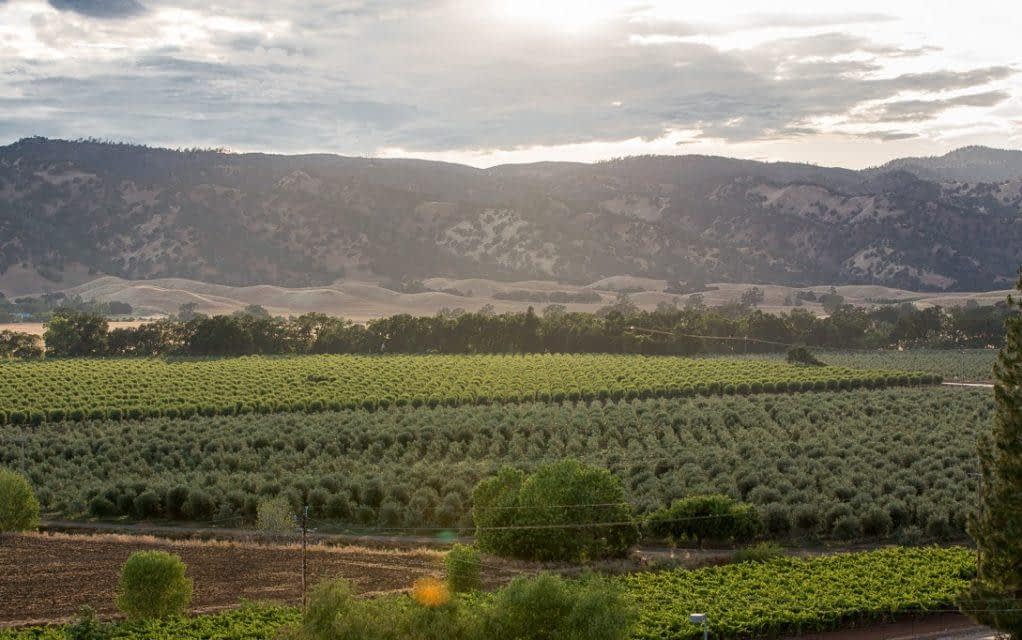
Etters attributes the Mediterranean climate of the Capay Valley to Séka Hills’ success.
These trees were also planted and pruned to be easily harvested by machines, allowing the tribe to cultivate more olive varieties.
“I think it’s been, it’s been pretty successful now,” Etters said. “We also offer Frantoio to Taggiasca, Picual and Cortina to our customers, all as single varietal offerings.”
Etters admits that while he is unoriginal, he compares olive oil to wine. The reason why the tribe focuses on monovarietals is that he wants consumers to identify which olive oils work best for specific dishes and buy as many different types as they need to accomplish their culinary goals.
The one blend released by the tribe each year is a very democratic process, according to Etters. The tribal millers make small batches of four blends each season and allow tribal citizens to taste them all before voting on which one becomes the official tribal blend, which is then made in larger quantities and sold.
Etters said the ability of the tribe to have this fun and democratic process to decide on the blend is a direct result of the tribe’s growing olive oil culture.
“For sure, the tribal citizens use more oil now than ever before,” he said. “They get excited about the new harvest and the Olio Nuovo.”
Over the past decade, Etters said the tribe had learned a lot about olive growing and olive oil production. While Etters said their original instinct about the Mediterranean-like climate of the Capay Valley was correct, they faced a steep learning curve on plenty of other sides of olive farming.

Etters hopes for a frutiful havrest in 2023 after a disappointing yield last season.
“We learned how to manage our inventory for alternating crops – big years versus small years – as far as our production goes,” he said.
The tribe can now balance how much olive oil they have in their inventory to meet commitments to sell to retailers and in bulk to food service.
“Then this past year, we learned the challenges of having a major freeze at a time that hurt the crop,” Etters said. “We always continue to learn and try new things. I think that’s helped us along the way.”
He attributed the tribe’s success to its proximity to the Olive Center at the University of California-Davis, which he praised for its efforts to educate the tribe’s farmers and millers.
While it is still too early to forecast how the 2023 harvest will evolve, Etters hopes it will be better than the previous one, where the company produced between 25 and 50 percent less olive oil than usual.
“We’re about a week to 10 days late on what would historically be our bloom period, but the amount of buds on the trees is really good,” he said. “We’re hopeful that we have a good crop set and that it’s a bumper crop for us here in 2023.”
Share this article
Related Articles
Mar. 28, 2025
Tunisian Producer Targets Medicinal Market
Eagle Olive Oil from northern Tunisia earned a Silver Award at the 2025 NYIOOC World Olive Oil Competition for a Chetoui monovarietal.
Aug. 5, 2025
Discover the Versatility and Nutritional Value of Greek Rusks
Paximadi, comprising carbohydrates and fiber, is the unsung hero of Greek summer cuisine, the key ingredient to making healthy small meals in no time.

Jul. 7, 2025
Europe Continues to Liberalize Imports While Export Uncertainty Grows
As the United States considers more tariffs on European Union agricultural imports, including olive oil, another group of European countries removed tariffs on the Mercosur.
Dec. 1, 2025
Slovenia Unveils 'Olive Oil Fountain'
A groundbreaking olive oil fountain has opened in Slovenian Istria, highlighting the country’s emphasis on quality, research and sustainable olive cultivation.

Oct. 1, 2025
Swiss Psychiatric Hospital Adopts Olive Oil for Patient Health
Extra virgin olive oil is replacing other fats in the PDAG in Switzerland, in a decision driven by scientific evidence.
Feb. 3, 2025
Century-Old California Table Olive Canner Faces Permanent Closure
Extreme weather events and financial challenges mean Graber Olive House might have canned its last batch of its iconic table olives.
Jun. 19, 2025
Challenging Season, Winning Results for California Producers
California producers overcame weather and labor challenges to triumph at the 2025 NYIOOC, showcasing their resilience, dedication and innovation.
Sep. 22, 2025
The Essential Guide to Harvesting Olives
The olive harvest is an essential step in extra virgin olive oil and table olive production. From timing to methodology, every aspect of the harvest makes a difference.