Sustainability, Innovation Guide This Award-Winning Producer in Apulia
From trying out new production methods to transforming waste into renewable energy, the producers behind Frantoio Muraglia have found a winning combination.
“Sustainability is a life choice, as is sustainable farming, which can really make a difference,” Savino Muraglia, managing director of Frantoio Muraglia, told Olive Oil Times.
The Muraglia family has been growing olives for the last 160 years in the Apulian town of Andria.
We succeeded in making Coratina extra virgin olive oil more popular among those who somewhat feared its naturally robust nature.
“By applying agronomic techniques aimed at absorbing carbon dioxide and transforming vegetable waste, farmers can minimize the impact of their operations on the environment,” he added.
See Also: Producer ProfilesAlong with producing award-winning extra virgin olive oil, the Italian company is spearheading research aimed at carbon farming, the goal of which is to capture enough carbon dioxide to compensate for the company’s production activities.
“Sustainability comes from the countryside and what we can do as farmers for biodiversity and environment, much more than what might be written on a certified label,” Muraglia said.
The pivotal role farmers can exert in curtailing climate change is repeatedly cited by the European Green Deal, and it is considered of utmost importance by the European Union’s Farm to Fork strategy.
While the latest Muraglia projects include a growing role for renewable energy sources in the next few years, the company is currently analyzing eco-fertilizers. The fertilizers are produced by the bio-digestion of the company’s waste byproducts such as pomace and wastewater.
“This is just an example of transforming the waste of our traditional operations in innovative tools for farming,” Muraglia said. “Such a model does not only benefit the environment because of its eco-friendly nature, but it also cuts expenses many farmers face to buy fertilizers.”
The company recently inaugurated a new oil mill, which doubles the potential output per hour.
“The doubled productive capacity is not meant to produce twice the usual quantities but to do that in half the time,” Muraglia said. “That contributes to our effort to enhance the quality of our product year after year.”
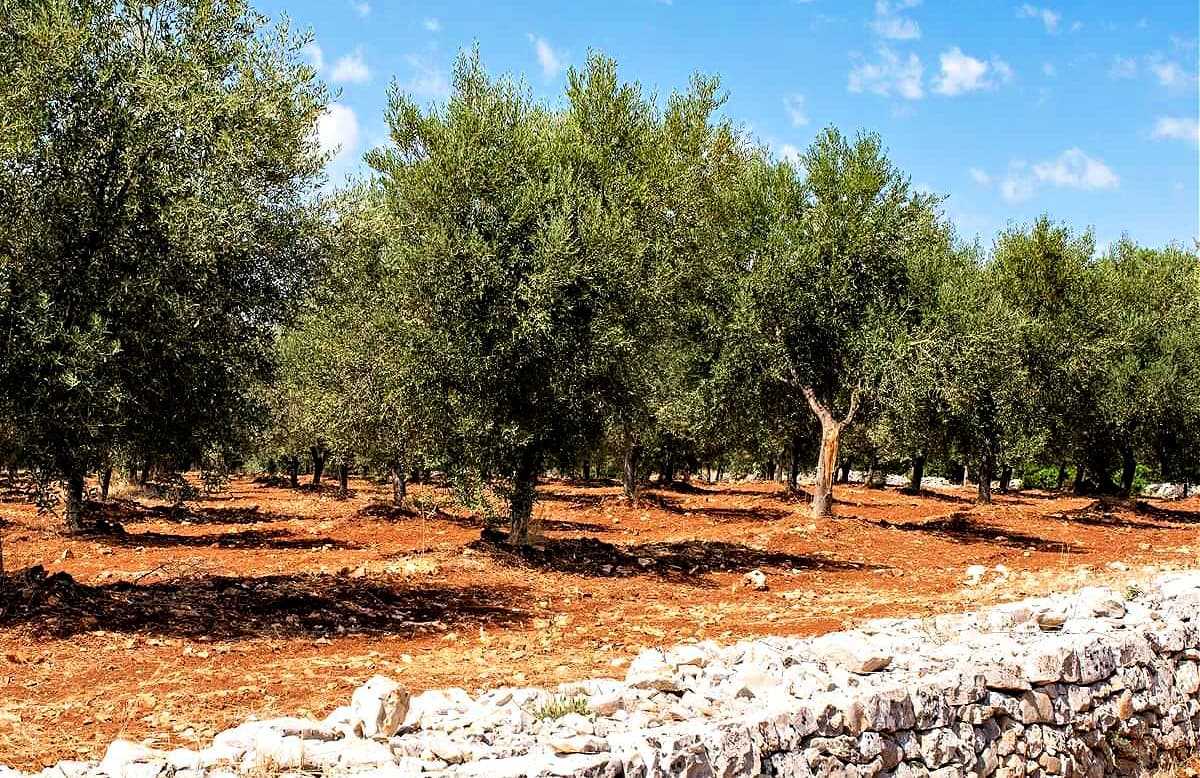
Photo: Frantoio Muraglia
That sustainability and innovation can lead to higher quality is evident in the many awards obtained by the Frantoio Muraglia extra virgin olive oils. At the 2021 NYIOOC World Olive Oil Competition, its Denocciolato brand, a monovarietal Coratina, once again won a Gold Award.
The oil’s name comes from the pitting of the olives before their transformation, an operation that gives Denocciolato its unique taste.
“Six or seven years ago, we began experimenting with a technique that was unseen in Puglia,” Muraglia said. “By excluding the stone, we end up eliminating the tannins while preserving the polyphenols.”
The pitting operation had been used in the past in Liguria and Tuscany to preserve polyphenols, which in some local cultivars such as Taggiasca or Moraiolo, might not be comparable to Coratina’s content. Still, such a technique lowers the yield.
“With Coratina, it means that you lose around 30 percent of yield,” Muraglia said. “It might seem too high a price for preserving polyphenols in a cultivar that is already extremely rich in polyphenols, but we do it for another reason. Pitting the olives gives our extra virgin olive oil a fruity and spicy and less edgy flavor.”
The idea was to curtail Coratina’s traditionally strong taste to offer a mild, fruity version.
“We succeeded in making Coratina extra virgin olive oil more popular among those who somewhat feared its naturally robust nature,” Muraglia added.
See Also: The Best Olive Oils from ItalyHis company produces 10,000 liters of its Denocciolato annually, 70 percent of which are bought by local families.
The company earned its other Gold Award at the 2021 NYIOOC for another monovarietal, its Gran Cru Tenuta Macchia di Rose. It is a smaller-scale production, with about 2,000 bottles produced each year, and comes from a small area of the company’s land in which the olives express a particular and strong flavor.
“I have tasted it for a few years, exploring over time how that note was expressed,” Muraglia said. “Then I understood that it was to become a Cru, which could compare with the Crus of our friends in Tuscany and Umbria.”
The company’s research into new ways of producing its extra virgin olive oils arrived at a turning point six or seven years ago when it began experimenting with the smoking process applied to its Coratina extra virgin olive oils.
“We went through several years of lab testing to verify the quality and the characteristics of the resulting extra virgin olive oil; to find the right smoking parameters while deploying techniques that were already successfully used with food specialties such as the Capocollo di Martina Franca ham,” Muraglia said.
That is how Olio Fumo (Smoke Oil) was born, smoked with beech wood in a dedicated environment.
“I believe it is the most elegant taste of all,” Muraglia said. Olio Fumo was initially destined for a niche market, but it soon became a cherished ingredient for many.
“We have Michelin-star holders who use Olio Fumo for their mayonnaise,” he said. “Chefs use it from pasta with pecorino and black pepper, and a wide array of pizza makers adopted it for their high-quality pizzas.”
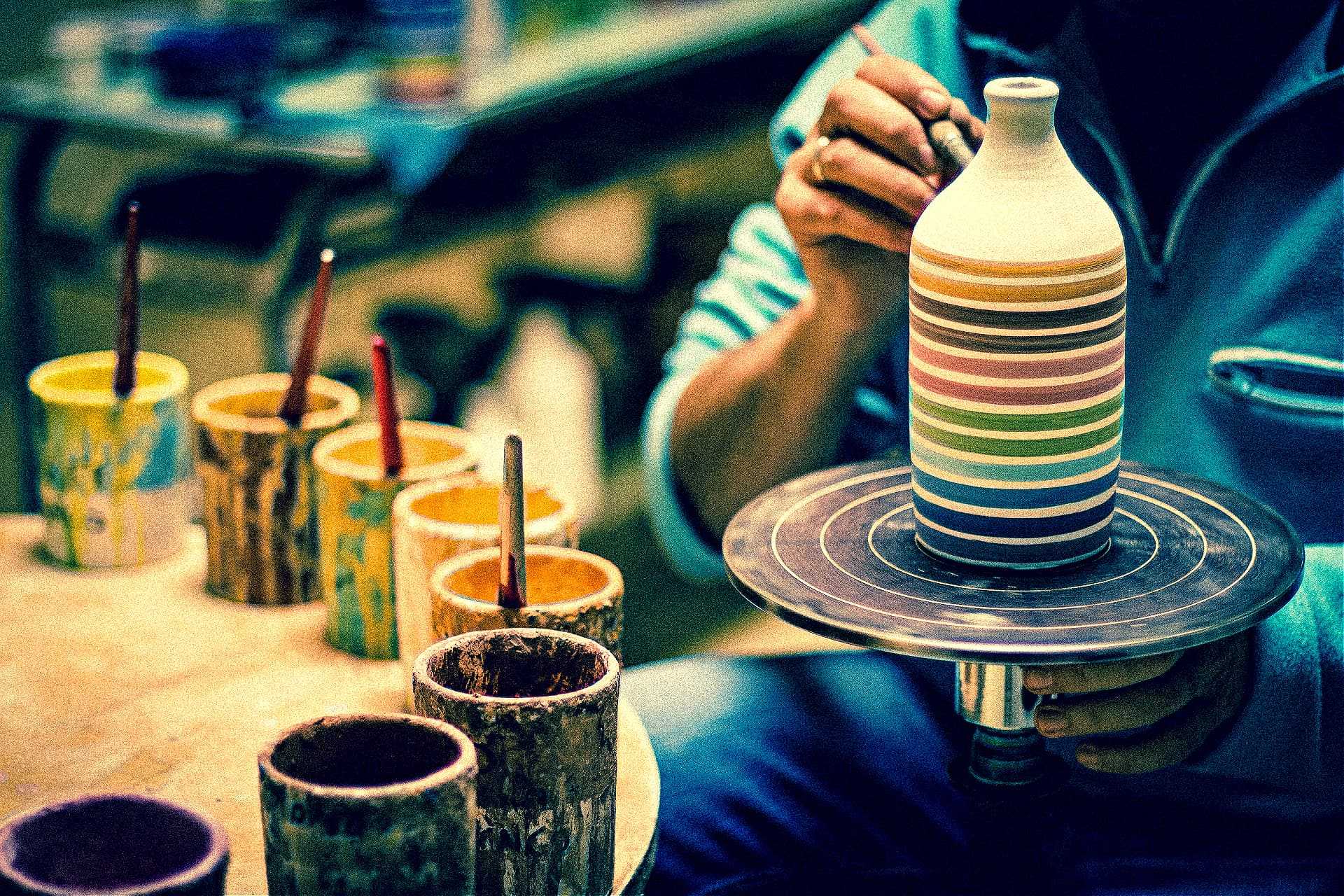
While some of the company’s products are shipped in bag-in-box containers, which protect the oil from light and oxygen, others have ended up in television shows in Europe and United States because of their unique ceramic designs. They are easily spotted in chefs’ kitchens.
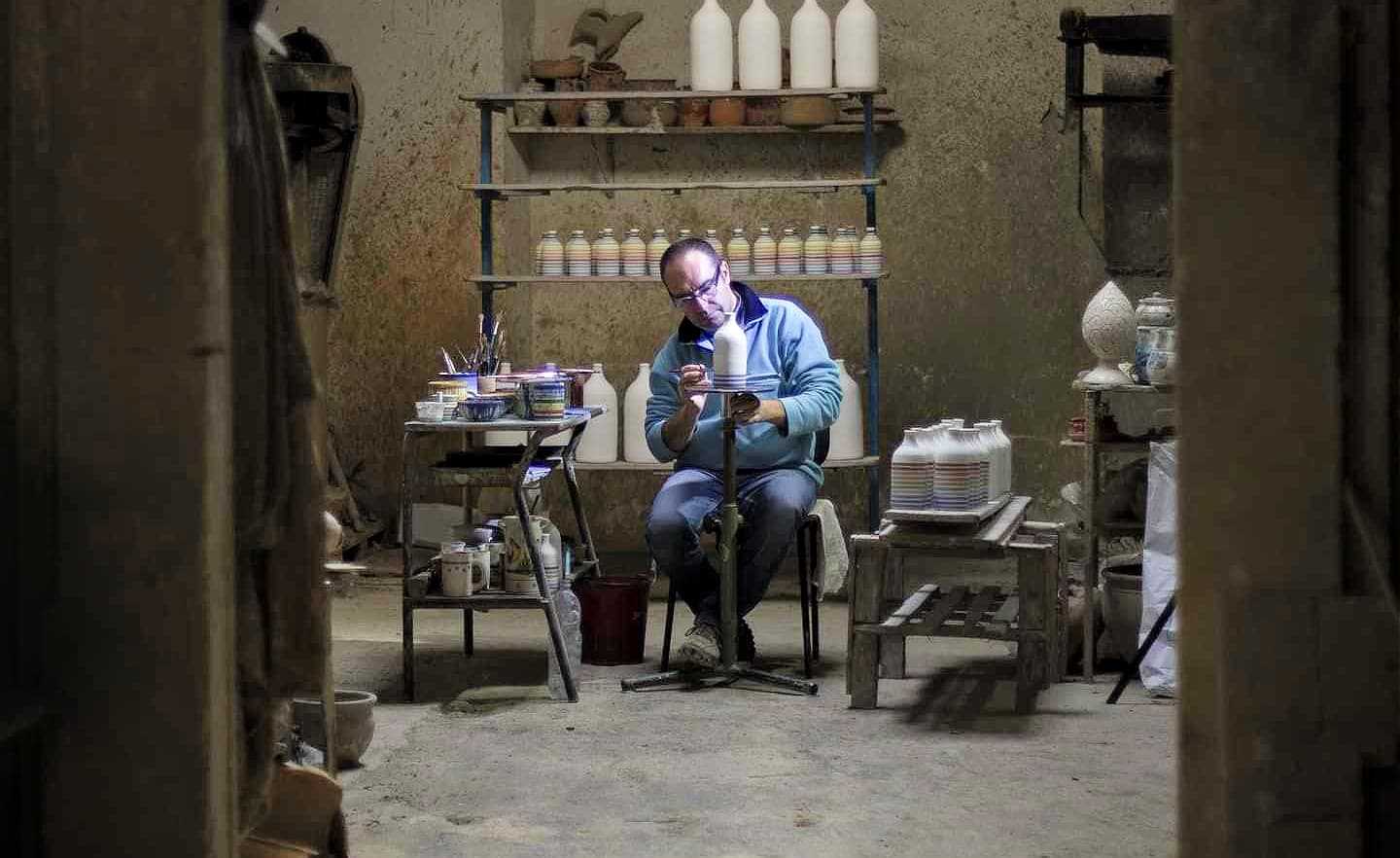
Photo: Frantoio Muraglia
The design of the bottles is so relevant to the marketing of the product that the Apulian extra virgin olive oil company ended up acquiring a local ceramic laboratory whose 15 artists are devoted to creating new formats and colors for Muraglia’s ceramics.
The new olive harvesting season, which is now to beginning, will reward the company’s efforts, he said.
Frantoio Muraglia
“We expect a great year for Puglia, and we expect a very high-quality olive oil,” added Muraglia, who is also president of the local chapter of Coldiretti, a farmers’ association.
“While this is a good opening to the harvest season, it is obvious that this crazy climate is destined to affect the quality of at least a portion of the olives,” Muraglia said in reference to all of Puglia, the largest olive oil-producing region in Italy.
“What increasingly emerges is that, with the changing climate, olive trees are more in need of supporting irrigation,” he concluded. “As the weather here increasingly resembles conditions seen in North Africa, we have to support our olive orchards with water, which is destined to become a discriminating factor in olive quality.”