Great Winterhoek Slopes Help Shape Award-Winning South African Olive Oils
Jan Hendrik Basson says cooler nights and careful harvest timing help Porterville Olives produce award-winning oils from the Great Winterhoek slopes, including its Nocellara del Belice flagship, Andante Intenso.
In South Africa’s Western Cape, family-owned Porterville Olives is adding momentum to the country’s growing olive oil industry, producing award-winning extra virgin olive oils under its Andante label.
“Our olives are located 15 kilometers south of Porterville, on the western slopes of the Great Winterhoek mountain range,” owner and master miller Jan Hendrik Basson told Olive Oil Times.
He said the area’s Mediterranean climate—hot, dry summers and cool, wet winters—helps shape the oils’ character. Basson added that the mountain influence slightly moderates summer heat, while cooler nights during ripening slow maturation and support flavor development.
The setting is paired with a long Basson family tradition of farming the land, passed down through generations.
Basson and his wife acquired the land from his father in 1998. In 2006, olive oil enthusiast Willie Duminy purchased a portion of the Basson farm and developed it into the Andante Olive Estate. The first olive trees were planted in 2007, and the first harvest followed in 2010.
In 2024, Basson regained ownership of the estate from the Duminy family, returning it to the original Basson farm after managing the groves and producing the oils from the start.
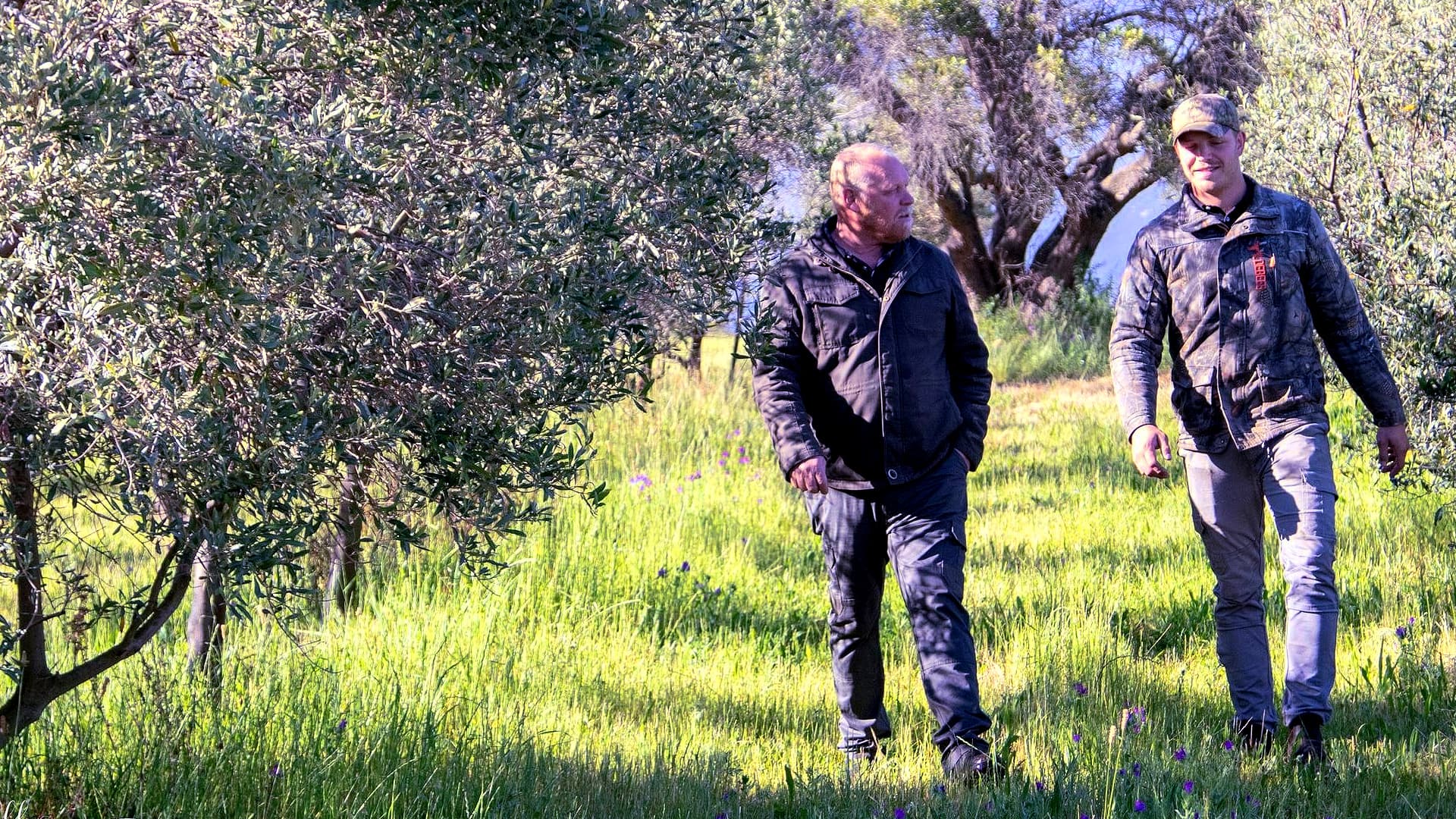
Jan Hendrik Basson, father, and his son Jan Hendrik Basson Jr. in the family groves
Basson, his wife, Merna, and their son, Jan Hendrik Jr., the fifth generation on the farm, now lead the olive operation at Porterville Olives.
The company’s groves include about 36,000 trees across multiple cultivars, including Frantoio, Leccino, Coratina, FS17, Mission, Kalamata, Nocellara del Belice and Koroneiki.
“Our olive trees are planted on gently sloping, well-drained soils, with the orchards oriented to both north- and south-facing aspects,” Basson said.
He said the variation in exposure creates subtle differences in ripening, helping the oils express balance, freshness and complexity.
Supplementary irrigation is typically applied from October through April or May, when the harvest occurs, to reduce fruit stress during South Africa’s dry season.
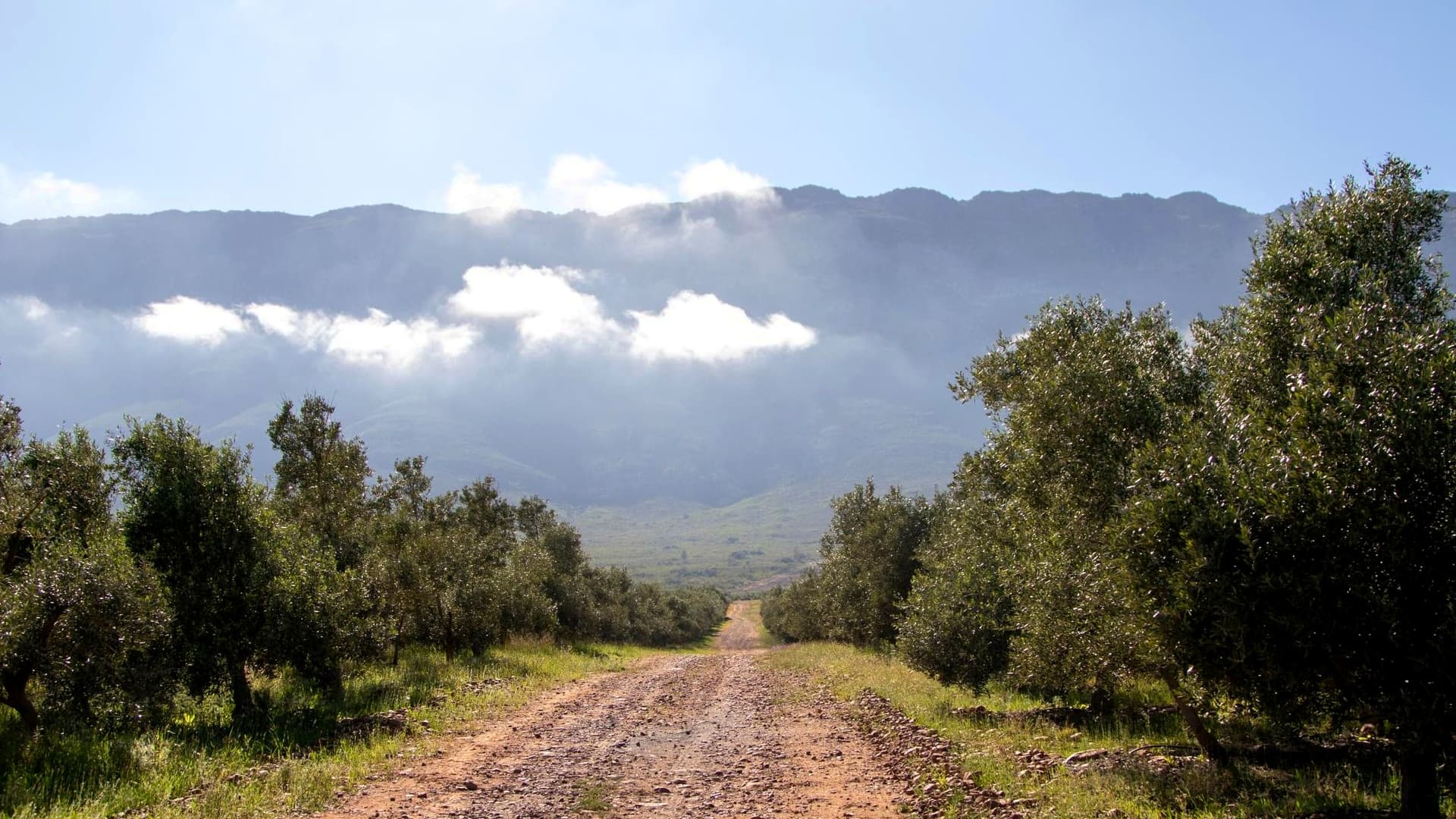
Porterville Olives
Basson said the farm is in the early stages of a transition to regenerative farming, describing it as a long-term effort focused on rebuilding soil carbon and topsoil organic matter.
“Improving soil structure and biological activity is central to promoting the development of a healthy root system, which is essential for consistent olive fruit quality,” he said.
Andante Intenso is the company’s flagship, a medium-to-intense monovarietal extra virgin olive oil made exclusively from Nocellara del Belice.
The producer’s Andante oils have been recognized with Gold and Silver Awards at the NYIOOC World Olive Oil Competition since 2016. In the 2025 edition for Southern Hemisphere producers, Porterville Olives won two Gold Awards for Andante Intenso and Andante Forte, bringing its total to 17 NYIOOC awards (12 Gold and five Silver).
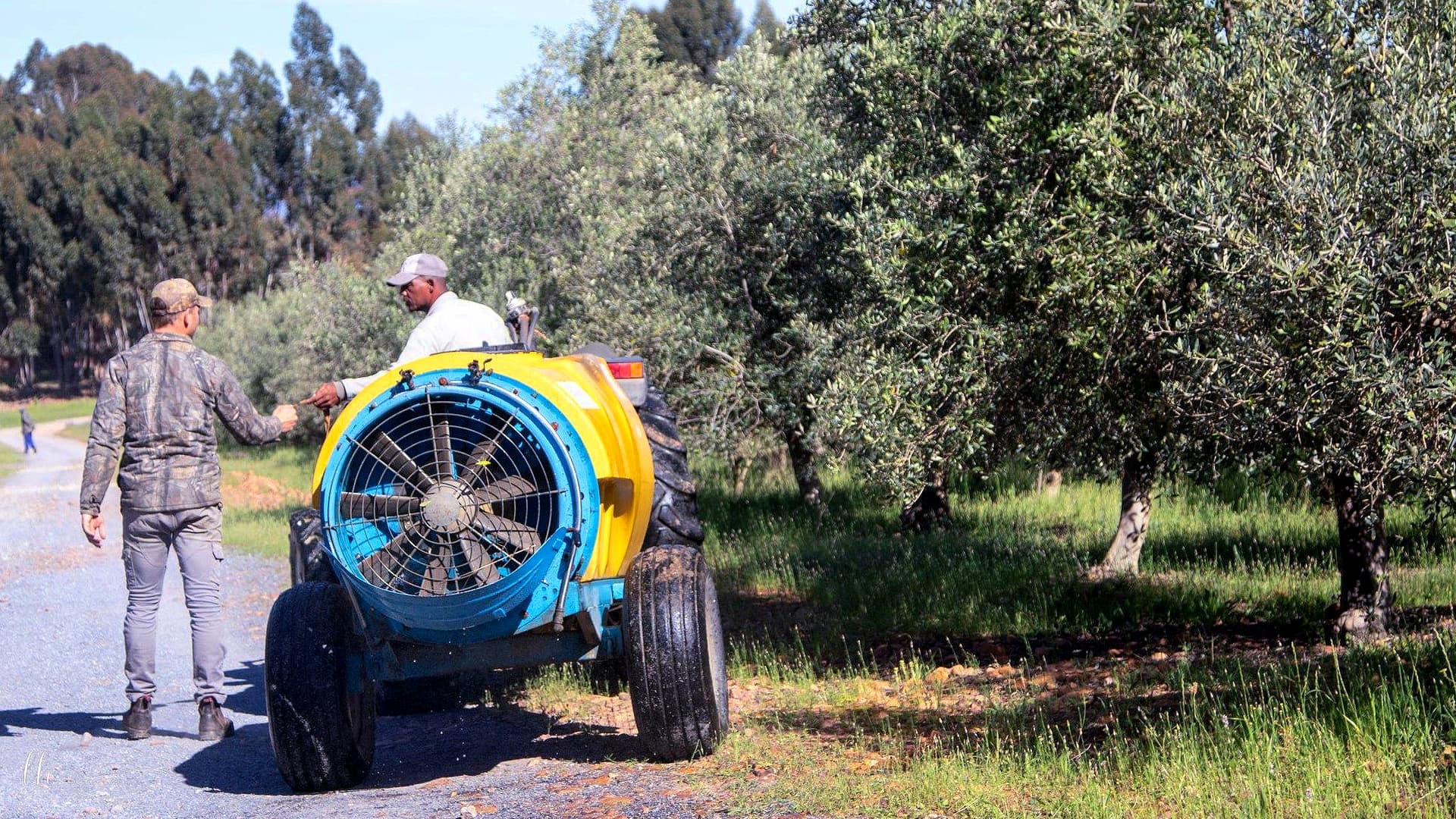
Harvest at the Andante olive farm
Porterville Olives is listed in the Official Guide and ranks as South Africa’s most successful producer on the Olive Oil Times World Ranking, which tracks the most-awarded producers and brands worldwide. The country’s performance is detailed on the South Africa country stats page.
“Willie Duminy, who started the olive farm in 2007, wanted to make the best olive oil in South Africa and the world, a vision that seemed impossible at the time,” Basson said.
“The two gold awards we received at the 2025 NYIOOC demonstrate that our olives remain of world-class standards,” he added.
Basson said the 2025 harvest produced more olives than in 2024, but the oil yield in liters per kilogram of fruit was lower than in previous years.
“The quality was still outstanding,” he said. “As a small-scale operation, we are able to focus our attention on harvesting each cultivar at their optimal ripeness, typically green to half-ripe.”
He added that processing speed is critical. Minimizing the time from harvest to press helps keep peroxides low, while earlier harvesting supports naturally higher polyphenol levels, which contribute to intensity, freshness and stability.
“When daytime temperatures are high, fruit is cooled overnight and pressed first thing in the next morning,” Basson said. “Every step is focused on quality over yield.”
Although South Africa accounts for about one percent of global supply, Basson said the local sector has shown strong potential in recent years, with quality at the center of its growth.
From the Great Winterhoek slopes, he said the company aims to add value to the domestic market by increasing the availability of high-grade oils.
“At present, only a small percentage of our oil is marketed as premium extra virgin olive oil, but our goal is to grow this market share locally through consumer education and brand development,” Basson said.
He added that Porterville Olives is also looking to expand into the United States, citing the latest dietary guidelines that place olive oil and table olives at the center of healthy eating.
However, Basson said South African producers can struggle for recognition even at home.
“While climate, political uncertainty and rising input costs are real challenges, the greatest pressure on our business comes from prices, and this is largely a market issue,” he said.
“Much of the imported olive oil from Italy and Spain is of low quality, with some of it blended with seed oils and sold as olive oil blends with misleading labels,” Basson added. “These practices distort the market, making it difficult for producers of genuine extra virgin olive oil to compete.”
He said the company views its NYIOOC results as a benchmark as it works to solidify the Andante brand among the world’s leading olive oils.
“Receiving awards at the prestigious NYIOOC World Competition is a useful benchmark for us,” Basson said. “It allows us to compare our olives with those of producers from around the world and provides an objective measure of quality beyond our local context.”
“This international recognition gives us confidence that the care and attention we invest in our groves and harvest practices translates into oils that are genuinely world-class,” he added.